Bachelorarbeiten im Sommersemester 2022 am Institut für Systemtheorie und Regelungstechnik - Institute for Systems Theory and Automatic ...
←
→
Transkription von Seiteninhalten
Wenn Ihr Browser die Seite nicht korrekt rendert, bitte, lesen Sie den Inhalt der Seite unten
Institut für Systemtheorie und Regelungstechnik - Universität Stuttgart
                                                                        Prof. Dr.-Ing. Frank Allgöwer
                                                                                        31. März 2022

            Bachelorarbeiten im Sommersemester 2022
        am Institut für Systemtheorie und Regelungstechnik
Liebe Studierende,

Sie sind auf der Suche nach einer Bachelorarbeit (BA) und begeistert von Regelungstechnik? Dann lesen
Sie unbedingt weiter, denn hier werden Sie über die Möglichkeit informiert, eine BA am IST anzufertigen.

Wie läuft eine Bachelorarbeit am IST ab?
  • Neben dem Bearbeiten des Themas gehört das Anfertigen einer schriftlichen Ausarbeitung sowie
    das Halten einer 20-minütigen Präsentation zum festen Bestandteil jeder BA.
  • Das IST bietet drei Seminarvorträge an, die Ihnen wichtige Schlüsselqualifikationen für das An-
    fertigen Ihrer BA vermitteln. Daher sind diese Seminarvorträge verpflichtend (Ausnahme: Sie
    haben bereits das Proseminar Technische Kybernetik am IST absolviert). Außerdem werden Ih-
    nen diese Vorträge angerechnet, falls das Modulhandbuch Ihres Studiengangs das Hören von neun
    Vorträgen während der BA vorschreibt.
  • Der Start einer BA ist flexibel. Die Seminarvorträge finden allerdings am 2., 9. und 16. Mai jeweils
    um 15:45 statt und sollten daher bei einem späteren Start der BA bereits vorab gehört werden.
  • Alle BAs können sowohl auf Deutsch als auch auf Englisch angefertigt werden.
  • Einige Themen können auch in einer Gruppe von 2-3 Personen bearbeitet werden.

Wie kann ich mich auf eine ausgeschriebene Arbeit bewerben?
  • Schicken Sie Ihre Bewerbung zentral an schwenkel@ist.uni-stuttgart.de. Wenn Sie an meh-
    reren Arbeiten Interesse haben, machen Sie eine Prioritätenliste. Bedenken Sie, dass die Qualität
    Ihrer Bewerbung ausschlaggebend dafür sein kann, ob Sie ihr gewünschtes Thema erhalten.
  • Bitte bewerben Sie sich nur auf Arbeiten, die zu Ihren Interessen und Fähigkeiten passen.
  • Der Bewerbungsschluss ist Dienstag, der 19. April 23:59. Spätestens dann erhalten Sie eine
    Antwort auf Ihre Bewerbung.
  • Natürlich haben Sie die Möglichkeit, die jeweiligen Betreuer*innen kennenzulernen, bevor Sie
    offiziell zu einem Thema zusagen müssen.

Welche Themen sind gerade ausgeschrieben?
  • Am IST gibt es ein breites Spektrum an BAs, die von praktischen Arbeiten im Labor über
    Simulations- und Programmierarbeiten bis hin zu theoretischen Forschungsarbeiten reichen.
  • An dieses Dokument sind alle aktuell ausgeschriebenen BAs angehängt, eine Übersicht finden Sie
    auf der nächsten Seite.
  • Bei Fragen zu einem Thema können Sie sich direkt beim Betreuer melden.
  • Bitte beachten Sie, dass die nächsten BA Themen erst wieder zum WS22 ausgeschrieben werden.

Bei Fragen zu einem ausgeschriebenen Thema melden Sie sich bitte direkt bei den jeweiligen Betreu-
er*innen, bei organisatorischen Fragen wenden Sie sich bitte an mich.

Mit besten Grüßen
Lukas Schwenkel

                                                   1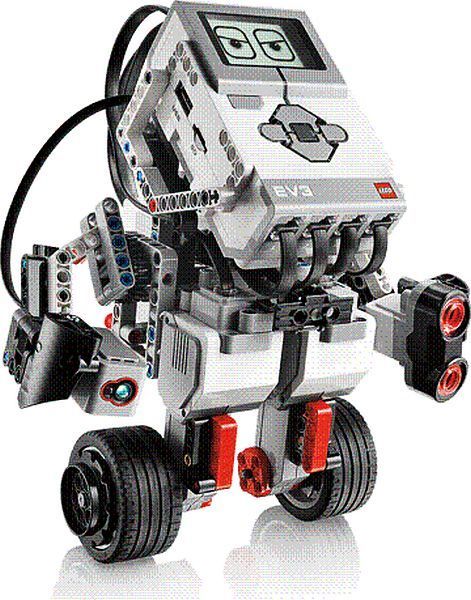
Institut für Systemtheorie und Regelungstechnik - Universität Stuttgart
                                                                  Prof. Dr.-Ing. Frank Allgöwer
                                                                                  31. März 2022

           Bachelorarbeiten im Sommersemester 2022
       am Institut für Systemtheorie und Regelungstechnik

Inhaltsverzeichnis
1 System Identification for a Self-balancing Autonomous E-scooter                             3

2 Guarantees for neural networks - conservatism analysis                                      4

3 Evaluation of event-triggered control mechanisms                                            5

4 Cloud-based encrypted control                                                               6

5 Inferring system properties from inter-communication times of event-triggered con-
  trol                                                                               7

6 Controller design for a LEGO-Mindstorms robot                                               8

                                            2
Universität Stuttgart
Institut für Systemtheorie und Regelungstechnik
Prof. Dr.–Ing. Frank Allgöwer
Open Thesis (BA)
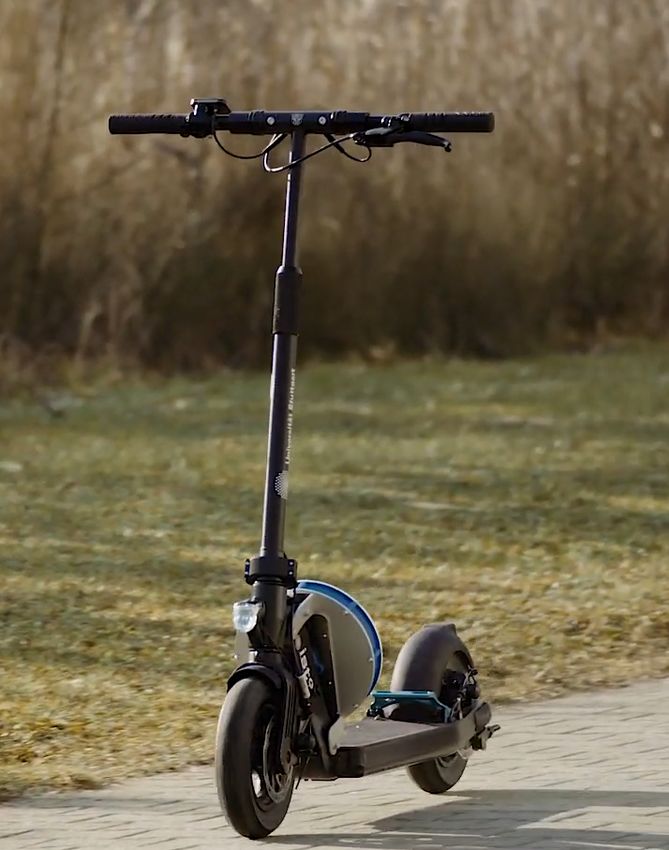
System Identification for a Self-balancing
Autonomous E-scooter
Description: Supervisor:
Felix Brändle,
The interest in novel individual transportation possibilities Marc Seidel
has recently increased and led to a rise in popularity of e- Room 3.239, 2.238
scooters. To increase the effectiveness of an e-scooter fleet,
an autonomous e-scooter is developed at the IST, which is,
for example, able to autonomously drive to a customer or Area:
to a charging station. The current prototype is provided
with a balancing controller that is able to stabilize its upright System identification
position. However, the presence of disturbances as well as Autonomous vehicles
model uncertainty makes the design of a controller particularly
challenging, and might lead to instability.
Based on this motivation, the goal
of this thesis is to reduce the model Properties:
inaccuracy by identifying the un-
derlying dynamics of the e-scooter. Type: BA
In particular, after a first literature
review, you need to design and con- 30% literature
duct experiments in order to either 20% simulation
estimate unknown parameters or 50% experiments
construct a more accurate model.
After such an identification phase
is completed, the identified model Beginning:
is employed in the controller to an-
alyze the closed-loop performance. anytime
Prerequisites:
• Python
• Basic knowledge in system identification (recommended)
• Matlab (recommended)
Further information on www.ist.uni-stuttgart.de/lehre/bama
3 Aushang vom March 30, 2022Universität Stuttgart
Institut für Systemtheorie und Regelungstechnik
Prof. Dr.–Ing. Frank Allgöwer
Open thesis (MA, SA, BA)
Guarantees for neural networks {
conservatism analysis
Description: Supervisor:
Neural networks (NNs) are Patricia Pauli
hardly applied in safety- Zimmer 3.234
critical systems. Yet, using
control theoretic tools li-
ke linear matrix inequali- Area:
ties (LMIs), we can verify
robustness and stability Control theory for
guarantees for NNs. These certificates are established des- neural networks
cribing common activation functions in NNs by quadratic
constraints. This way, we can for example capture sector-
boundedness, slope-restriction, positivity, and boundedness
of the activation functions. Using LMIs, we can then deter-
mine an upper bound on the Lipschitz constant of an NN or Properties:
guarantee a Lipschitz bound during training. However, this
upper bound is possibly conservative. In this thesis project, Type: MA, SA, BA
we aim at quantifying the gap between the true Lipschitz
constant and the estimated upper bound in respect to the 30% literature
NN dimensions. In addition, we aim at quantifying the con- 40% simulation
servatism of the stability analysis, connecting the use of NN 30% theory
controllers to the well-known problem of absolute stability.
Prerequisites:
Beginning:
• Basic course in Automatic Control and in Machine
Learning anytime
• Interested in neural networks and coding
Weitere Informationen: www.ist.uni-stuttgart.de/lehre/bama
Aushang vom 28. März 2022
4Universität Stuttgart
Institut für Systemtheorie und Regelungstechnik
Prof. Dr.–Ing. Frank Allgöwer
Open Thesis (BA)
Evaluation of event-triggered control
mechanisms
Description: Supervisor:
Networked control systems Michael
(NCS) are control systems Hertneck
in which some or all links Room 3.240
in the feedback loop are replaced by a shared communicati-
on network. The classical periodic implementation of feed-
back controllers with periodic transmissions at predefined Area:
transmission times may however lead to a waste of network
recources for NCS. An alternative, called event-triggered Networked Control
control (ETC), is to transmit state information at time in- Systems
stants that are determined by a state-dependent trigger ru-
le. Thus, transmissions are only triggered for ETC when this
is required due to the state evolution of the system. Ma-
ny results confirm the advantageousness of ETC, as long as
the effect of ETC on the network utilization is neglected. Properties:
Often ignored is the fact that ETC can lead to unbalanced
network utilization which may result in worse control per- Type: BA
formance. The goal of this thesis is to evaluate existing ETC
mechanisms from the literature in a simulation study and to
compare the resulting control performance to periodic con-
trol. In this context, the effect of the ETC on the network
load shall be explicitly considered. Beginning:
Prerequisites: At any time
• Basic knowledge of feedback control (e.g. lectures Sys-
temdynamik and Einführung in die Regelungstechnik )
• Interest in theoretical problems and numerical simula-
tions
Weitere Informationen: www.ist.uni-stuttgart.de/lehre/bama
5 Aushang vom 28. März 2022Universit
at Stuttgart
Institut f
ur Systemtheorie und Regelungstechnik
Prof. Dr.–Ing. Frank Allgöwer
Open Thesis (BA/SA)
Cloud-based encrypted control
u Plant x
Description: Actuator x+ = f (x, u) Sensor
Supervisor:
Controller
u = p(x) Sebastian Schlor,
In cloud-based control, evalu- ⟦u⟧ ⟦x⟧
Stefan
ation of the control law is out- Wildhagen
sourced to a powerful exter-
nal cloud computing service.
Although this approach is highly flexible and allows to forgo
expensive hardware which runs the controller, there might be Area:
privacy concerns since the cloud might not be trustworthy. If
the measurements, the control actions or the control policy Encrypted Control,
are confidential, encrypted control can be used to compute Multi-party
control actions in the cloud without revealing any informa- computation
tion about the data to the cloud provider. For this purpose,
secure control schemes relying on multi-party computation
have been developed at the IST. The goal of this thesis is to
implement this scheme and possibly other encrypted control Properties:
schemes on real (external) servers, and to compare their real-
time capabilities. Further, a software-in-the-loop simulation Type: BA/SA
(or possibly even a hardware-in-the-loop simulation using one
of the IST’s experimental setups) using a cloud controller can 15% literature
be set up, and the control performance be compared to a local 15% theory
controller. 60% implementation
Prerequisites:
• Course Einführung in die Regelungstechnik Beginning:
• Experience in Python and Matlab, having fun with pro- April 2022
gramming
Further information on www.ist.uni-stuttgart.de/lehre/bama
Aushang vom March 15, 2022
6Universit
at Stuttgart
Institut f
ur Systemtheorie und Regelungstechnik
Prof. Dr.–Ing. Frank Allgöwer
Open Thesis (BA/SA)
Inferring system properties from
inter-communication times of
event-triggered control
Description: Supervisor:
In networked control systems, measurements and control ac- Sebastian Schlor,
tions are sent via a communication network between sensor, Stefan
controller and actuator. Thereby, the controller can be out- Wildhagen
sourced to a powerful external cloud computing service. Be-
sides all the advantages of this flexible approach, there might
be privacy concerns. If the measurements, the control actions
or the control policy are confidential, encrypted control can be Area:
used to compute control actions in the cloud without revealing
any information about the data to the cloud provider. Networked Control
To reduce the amount of communication in the network, event- Encrypted Control
triggered control schemes were developed. There, measure-
ments are only sent to the controller if certain triggering
conditions are met. In combination, encrypted event-triggered
networked control is communication-efficient and data privacy Properties:
is maintained. However, the communication events can be
observed. Type: BA/SA
The goal of this thesis is to investigate which system properties
can be determined if the transmitted data is hidden but the 40% literature
communication pattern is known. 50% implementation
10% simulation
Prerequisites:
• Course Einführung in die Regelungstechnik
• Interest in systems theory, having fun with theoretical Beginning:
work April 2022
Further information on www.ist.uni-stuttgart.de/lehre/bama
Aushang vom March 15, 2022
7Universität Stuttgart
Institut für Systemtheorie und Regelungstechnik
Prof. Dr.–Ing. Frank Allgöwer
Open Thesis (BA)
Controller design for a LEGO-Mindstorms
robot
Description: Supervisor:
Tim Martin
The LEGO -Mindstorms
®
Room 2.236
robots provide an easy entry
into control for students.
Therefore, usually simple Area:
control structures are imple-
mented in order to stabilize Implementation of
a segway or to follow a controllers for real
line. Now the question plants
rise whether more complex
control stuctures, as taught
in an initial control lecture
as Einführung in die Regelungstechnik or from the literature,
can be successfully implemented on the LEGO-Mindstorm Properties:
brick. To this end, Matlab/Simulink and more reliable sensors
than from LEGO® are used in this project. Type: BA
Subject of this project will be modelling a LEGO-Mindstorms
robot, validation of the model and controller with Mat- 20% literature
lab/Simulink, and implementation of the controller on the 20% simulation
LEGO-Mindstorms brick using Matlab/Simulink. 20% modelling
40% implementation
Prerequisites:
• Einführung in die Regelungstechnik lecture or equivalent Beginning:
courses any time
• Experience with Matlab/Simulink is desired
Further information on www.ist.uni-stuttgart.de/lehre/bama
Aushang vom March 16, 2022
8Sie können auch lesen


