IODP/ICDP Kolloquium 2019 - Universität zu Köln 18 - 20. März 2019 - Uni Kiel
←
→
Transkription von Seiteninhalten
Wenn Ihr Browser die Seite nicht korrekt rendert, bitte, lesen Sie den Inhalt der Seite unten
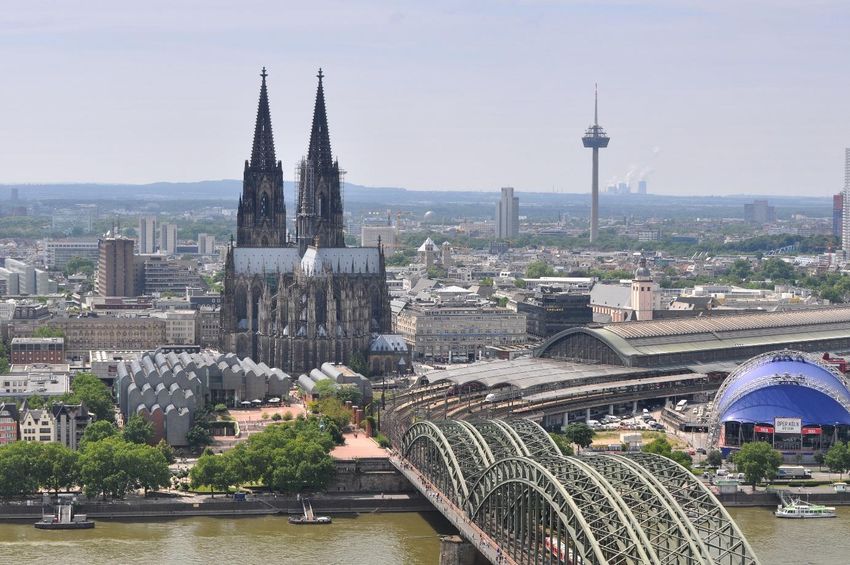
IODP/ICDP Kolloquium 2019

                         Universität zu Köln

                         18. – 20. März 2019

© Ruth Rudolf, PIXELIO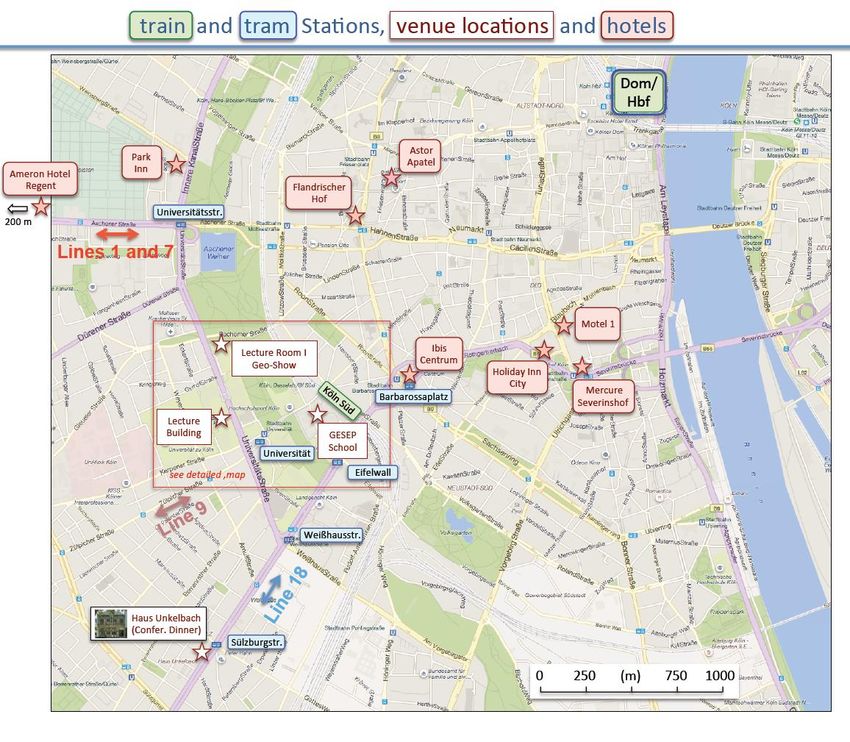
IODP/ICDP Kolloquium Köln vom 18.03. – 20.03.2019

         Seite - Page 2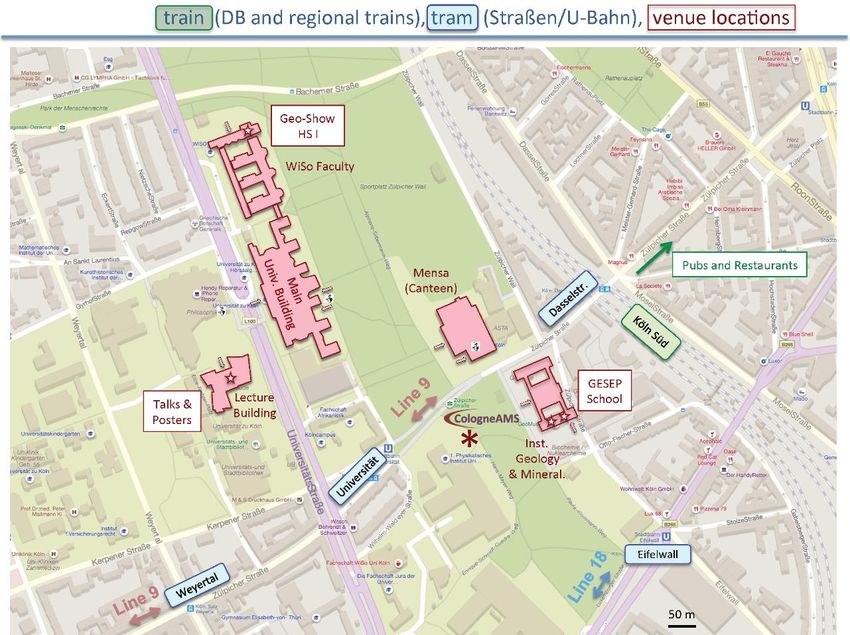
IODP/ICDP Kolloquium Köln vom 18.03. – 20.03.2019

         Seite - Page 3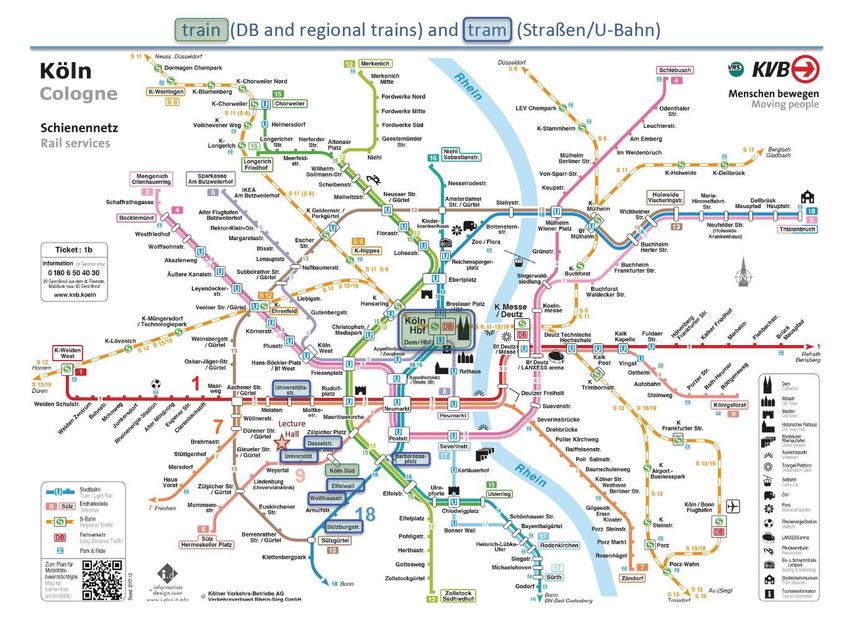
IODP/ICDP Kolloquium Köln vom 18.03. – 20.03.2019

Tagungsprogramm – Agenda

Montag, 18. März 2019 – Monday March 18th, 2019

   08:30                13:30         Registrierung - Registration

   Parallel stattfindend:
                                        Geo-Show "Unterirdisch": im Hörsaal I der WiSo-Fakultät der Uni, Universitätsstr. 24, 50931
   10:30                12:00
                                                                                Köln

                                       Beginn Kolloquium – Beginning of conference
   13:30                13:50                                                   Begrüßung - Reception
   13:50                14:10                                           Bohnhoff, Marco/ Krastel, Sebastian
                                                                     ICDP Rückblick auf 2018 - Wie geht es weiter?
   14:10                14:30                                       Erbacher, Jochen/ Bornemann, André
                                                                 IODP Rückblick auf 2018 - Wie geht es weiter?

             Wissenschaftliche Beiträge zu IODP und ICDP – scientific talks related to IODP and ICDP
   14:30                14:50                                               Bergmann, Fenna
                                    The HimalFan project – The Quantification of Himalayan Erosion Fluxes from the Bengal Fan record
                                                         based on seismic stratigraphy and geochemical analyses
   14:50                15:10                                            Bretschneider, Lisa
                                       Indian Monsoon induced erosion during the Miocene recorded at IODP Site U1443 (Exp. 353)
   15:10                16:20                    Posterpräsentation und Kaffeepause – Presentation of posters and coffee break

                                                                      Panagiotopoulos, Konstantinos
   16:20                16:40
                                                Pollen- and biomarker-inferred climate at Lake Ohrid in the Early Pleistocene
                                                                        Neugebauer, Ina
   16:40                17:00        TEPH-ME: CryptoTEPHrochronology in the ICDP Dead Sea deep core as a key to synchronise past
                                                        hydroclimate changes in the eastern Mediterranean
                                                                            Gischler, Eberhard
   17:00                17:20
                                                 Geomorphology of the Belize Barrier Reef margin: a survey for IODP drilling
                                                                             Drury, Anna Joy
   17:20                17:40
                                    Achieving a global late Miocene stable oxygen isotope reference stratigraphy spanning 8.00-5.33 Ma
                                                                        Diekmann, Bernhard
   17:40                18:00       Palaeoenvironmental Messages from Lake Teletskoye, Sibirian Altay Mountains: State of Findings and
                                                                         future Perspectives .
           Im Anschluss: Posterpräsentation und ICEBREAKER:– Presentation of posters and ICEBREAKER: Hörsaalgebäude,
                                                 Universitätsstrasse 35, 50931 Köln

Dienstag, 19. März 2019 – Tuesday, March 19th, 2019

                                        Fahrtberichte IODP – Cruise Reports IODP
                                                                                Brandl, Philipp A.
   09:00                    09:20
                                                                        IODP Expedition 376 Brothers Arc Flux
                                                                               Esper, Oliver:
   09:20                    09:40
                                                        IODP Expedition 374: Ross Sea West Antarctic Ice Sheet History
                                                                               Kutterolf, Steffen
                                     Unlocking the secrets of slow slip by integrating core data, seismic and mechanical experiments, as
   09:40                    10:00
                                     well as borehole observatories at the offshore Hikurangi subduction zone, IODP Expeditions 372 &
                                                                                      375

                                                             Seite - Page 4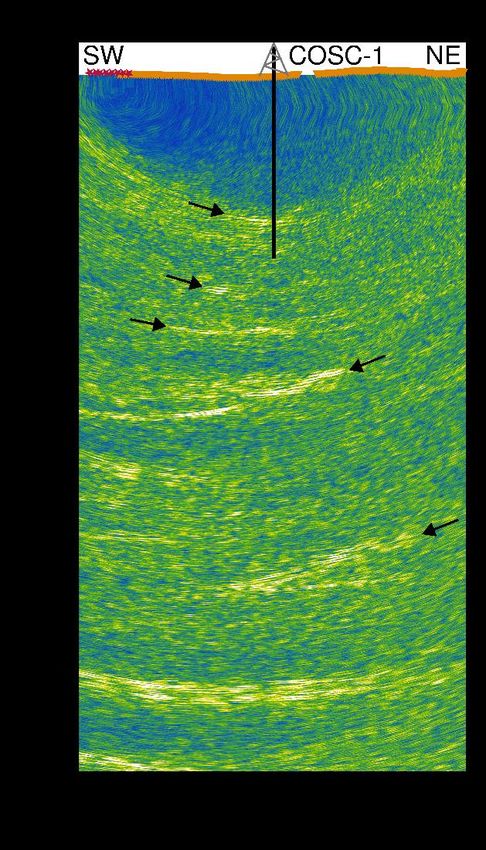
IODP/ICDP Kolloquium Köln vom 18.03. – 20.03.2019

                                                                     Seguin, Joana
10:00               10:20
                                                IODP Expedition 381: Development of the active Corinth Rift

        Wissenschaftliche Beiträge zu IODP und ICDP - scientific talks related to IODP and ICDP
                                                                 Zimanowski, Bernd
10:20               10:40   Forschungsbohrung auf Surtsey Experimentelle Untersuchungen zur Entstehung und der thermischen
                                                                Geschichte (SUSTAIN)

10:40               11:10               Posterpräsentation und Kaffeepause - Presentation of posters and coffee break

                                                                    Schubotz, Florence
11:10               11:30   Abiotic substrate generation and microbial-life signatures close to the temperature limit of life, IODP
                                                                      Expedition 370
                                                                        Zhang, Junli
11:30               11:50   Near lithostatic pore pressures prepare the Nankai décollement for the next megatsunami offshore SW
                                                                           Japan
                                                                      Dinske, Carsten
11:50               12:10    Rupture Imaging and Directivity of the 2014 M5.5 Earthquake Below a Gold Mine in Orkney, South
                                                                          Africa
                                                                    Heeschen, Katja
12:10               12:30      IODP Site U1517: Insights from hydrocarbon measurements into the gas-hydrate bearing slope
                                        sediments at the Toaheni Landslide Complex (TLC) offshore New Zealand.

12:30               14:00              Mittagspause und Posterpräsentationen - Presentation of posters and coffee break

                                                                         Zhang, Chao
14:00               14:20   Experiments on melt-peridotite interaction at crust-mantle boundary: Implications for heterogeneity in
                                                                        the lower crust
                                                                     Davis, Timothy
14:20               14:40
                                                         Can we predict fluid pathways in the crust?
                                                                 Schwarzenbach, Esther M
14:40               15:00
                                Tracking water-rock interaction at the Atlantis Massif (MAR, 30°N) using sulfur geochemistry
                                                                       Kästner, Felix
15:00               15:20   Core-log-seismic data integration to improve the seismic stratigraphy within the ICDP drilling project
                                                        COSC-1, Sweden: challenges and first results

15:20               16:30               Posterpräsentation und Kaffeepause - Presentation of posters and coffee break

                                                                     Schäbitz, Frank
16:30               16:50   Good times for leaving home? The paleoenvironment of Chew Bahir in south Ethiopia: implications for
                                                  human evolution, dispersal and technological innovation
                                                                       Lüdecke, Tina
16:50               17:10
                                               Early hominin dietary adaptation in diverse savanna ecosystems
                                                                    Hasberg, Ascelina
                             Sediment core analyses from ICDP TDP Site 2, Lake Towuti (Indonesia): Characterization of mass
17:10               17:30
                             movement deposits today and in the past. - Which information can we gain for other (lake) sediment
                                                                          studies?
                                                                   Kallmeyer, Jens
17:30               17:50
                                 Methanogenesis dominates organic matter mineralization in modern ferruginous sediments
                                                               Uenzelmann-Neben, Gabriele
17:50               18:10     Onset and modifications in intensity and pathways of water mass exchange between the Southeast
                                             Pacific and the South Atlantic with focus on the Falkland Plateau
                                 Gemeinsames Abendessen – joint conference dinner: Brauhaus Unkelbach, Luxemburger Str.
         Ab 19:30
                                                                   260, 50937 Köln

                                                   Seite - Page 5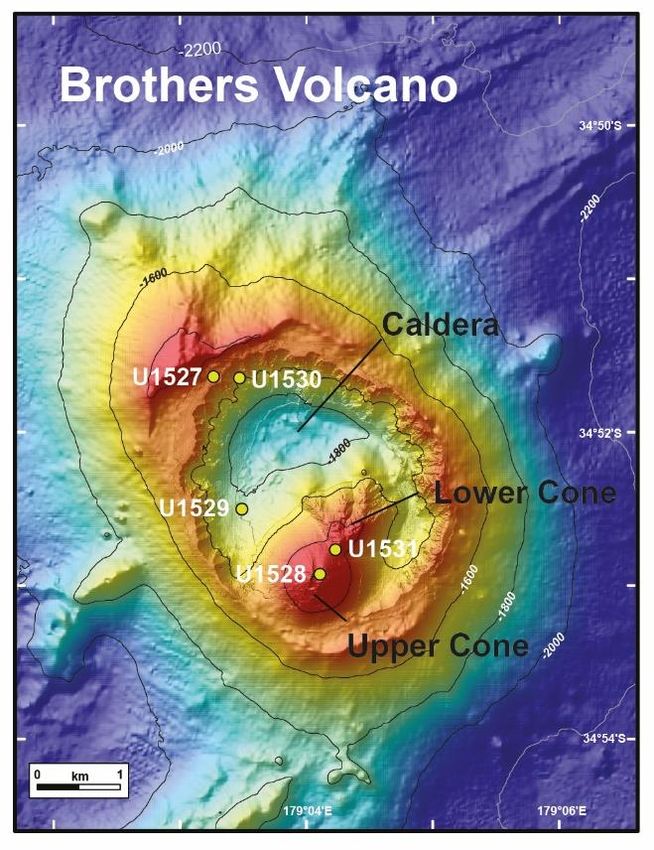
IODP/ICDP Kolloquium Köln vom 18.03. – 20.03.2019

Mittwoch, 20. März 2019 – Wednesday, March 20th, 2019

              Wissenschaftliche Beiträge zu IODP und ICDP - scientific talks related to IODP and ICDP
                                                                         Haberzettl, Torsten
   09:00             09:20        The Nam Co Drilling Project, Tibet (NamCore): A one million year sedimentary record from the third
                                                                                pole
                                                                             Schulze, Nora
   09:20             09:40
                                         Seismostratigraphic analysis of high-resolution 2D data from Nam Co, Tibetan Plateau
                                                                          Brzelinski, Swaantje
   09:40             10:00
                                             Mechanisms of glacial/interglacial climate variability during the Late Oligocene
                                                                           Link, Jasmin M.
   10:00             10:20
                                            Interhemispheric Gradient of Nd isotopes in the Deep Atlantic Ocean since 800 ka

   10:20             11:10                     Posterpräsentation und Kaffeepause - Presentation of posters and coffee break

                                                                          Thomas, Ariel
   11:10             11:30
                                              Simulating Submarine Fresh Groundwater Preservation Offshore New Jersey
                                                                            Steinhoff, Christoph
   11:30             11:50          Flow cytometry for purification of fossil pollen from Lake Van for AMS radiocarbon dating – a new
                                                                                   approach
                                                                        Prokopenko, Alexander
   11:50             12:10
                                            A Late Pliocene paleorecord from the extinct Lake Idaho, USA – a progress report

   12:10                                      Posterprämierung und Schlussworte – Poster Awards and Concluding Remarks

                  GESEP School - Lake Sediment Drilling, Core Processing and Geochronology im Institut für Geologie
   13:00
                  und Mineralogie, Universität zu Köln

   The key aspects of this course will comprise:

      1. Lacustrine sediments as paleoenvironmental archives
      2. Sediment core correlation and core processing
      3. Geochronological methods for Quarternary sediments
      4. Age-depth model development
                                 Ende: Donnerstag, 21. März 2019 – End March 21st, 2019

                                                         Seite - Page 6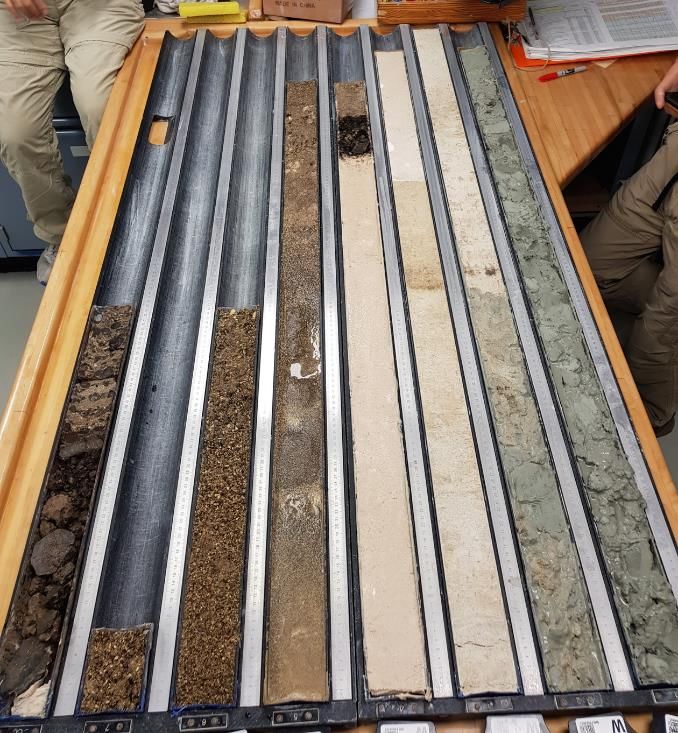
IODP/ICDP Kolloquium Köln vom 18.03. – 20.03.2019

Teilnehmerliste – Participants
 Name              Vorname          Institution und Ort
 Surname           Given Name       Affilation and Place

                                    Helmholtz-Zentrum Potsdam Deutsches GeoForschungsZentrum - GFZ, Potsdam

                                    Institut für Geographie und Geologie (Uni Greifswald), Greifswald

                                    Geowissenschaften (FB5 Uni Bremen), Bremen

                                    Institut für Geowissenschaften (Uni Heidelberg), Heidelberg

                                    Helmholtz-Zentrum für Ozeanforschung (GEOMAR), Kiel

                                    Alfred-Wegener-Institut Helmholtz Zentrum für Polar- und Meeresforschung, Potsdam

                                    Institut für Geowissenschaften (Uni Heidelberg), Heidelberg

                                    Helmholtz-Zentrum für Ozeanforschung (GEOMAR), Kiel

                                    Geowissenschaften (FB5 Uni Bremen), Bremen

                                    Helmholtz-Zentrum Potsdam Deutsches GeoForschungsZentrum - GFZ, Potsdam

                                    Institut für Geowissenschaften (Uni Heidelberg), Heidelberg

                                    Helmholtz-Zentrum Potsdam Deutsches GeoForschungsZentrum - GFZ, Potsdam

                                    Bundesanstalt für Geowissenschaften und Rohstoffe, Hannover

                                    Rabanus-Maurus-Schule Fulda, Fulda

                                    Helmholtz-Zentrum für Ozeanforschung (GEOMAR), Kiel

                                    Helmholtz-Zentrum für Ozeanforschung (GEOMAR), Kiel

                                    Institut für Chemie und Biologie des Meeres (ICBM - Uni Oldenburg), Oldenburg

                                    Institut für Geowissenschaften (Uni Heidelberg), Heidelberg

                                    Leibniz-Institut für Angewandte Geophysik (LIAG), Hannover

                                    Mineralogie, Petrologie und Geochemie (Uni München), München

                                    Institut für Geowissenschaften (Uni Heidelberg), Heidelberg

                                    Netherlands Institute of Ecology, Wageningen

                                    Geowissenschaften (FB5 Uni Bremen), Bremen

                                    Helmholtz-Zentrum Potsdam Deutsches GeoForschungsZentrum - GFZ, Potsdam

                                    Energie und mineralische Ressourcen Gruppe (RWTH Aachen), Aachen

                                    Hessische Staatskanzlei, 65183 Wiesbaden

                                    Zentrum für Marine Umweltwissenschaften (MARUM), Bremen

                                    Alfred-Wegener-Institut Helmholtz Zentrum für Polar- und Meeresforschung, Potsdam

                                    Alfred-Wegener-Institut Helmholtz Zentrum für Polar- und Meeresforschung, Potsdam

                                    Institut für Geologische Wissenschaften (FU Berlin), Berlin

                                    Leibniz-Institut für Angewandte Geophysik (LIAG), Hannover

                                    Helmholtz-Zentrum Potsdam Deutsches GeoForschungsZentrum - GFZ, Potsdam

                                    Zentrum für Marine Umweltwissenschaften (MARUM), Bremen

                                    Helmholtz-Zentrum für Ozeanforschung (GEOMAR), Kiel

                                    Institut für Bodenkunde (Uni Hannover), Hannover

                                    Institut für Geologie und Mineralogie (Uni Köln), Köln

                                    Institut für Geowissenschaften (Uni Potsdam), Potsdam

                                    Bundesanstalt für Geowissenschaften und Rohstoffe, Hannover

                                           Seite - Page 7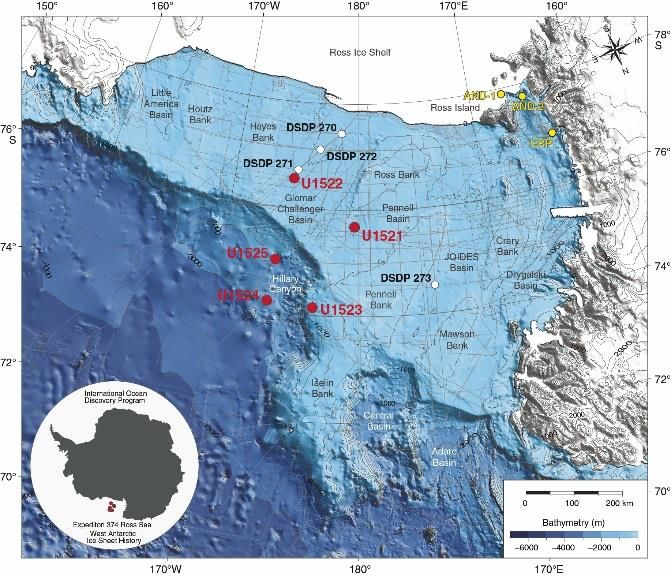
IODP/ICDP Kolloquium Köln vom 18.03. – 20.03.2019

Name      Vorname         Institution und Ort
Surname   Given Name      Affilation and Place

                          Mineralogie und Geodynamik (Uni Tübingen), Tübingen

                          Zentrum für Marine Umweltwissenschaften (MARUM), Bremen

                          Bundesanstalt für Geowissenschaften und Rohstoffe, Hannover

                          Helmholtz-Zentrum Potsdam Deutsches GeoForschungsZentrum - GFZ, Potsdam

                          Alfred-Wegener-Institut Helmholtz Zentrum für Polar- und Meeresforschung,
                          Bremerhaven
                          Institut für Geologie, Mineralogie und Geophysik (Uni Bochum), Bochum

                          Institut für Geophysik und Geologie (IGG - Uni Leipzig), Leipzig

                          Helmholtz-Zentrum für Ozeanforschung (GEOMAR), Kiel

                          Institut für Geographiedidaktik (Uni Köln), Köln

                          Helmholtz-Zentrum für Ozeanforschung (GEOMAR), Kiel

                          Institut für Umweltphysik (Uni Heidelberg), Heidelberg

                          Institut für Geowissenschaften (Uni Heidelberg), Heidelberg

                          Leibniz-Institut für Angewandte Geophysik (LIAG), Hannover

                          Alfred-Wegener-Institut Helmholtz Zentrum für Polar- und Meeresforschung,
                          Bremerhaven
                          Institut für Geowissenschaften (Uni Frankfurt), Frankfurt am Main

                          Alfred-Wegener-Institut Helmholtz Zentrum für Polar- und Meeresforschung,
                          Bremerhaven
                          Institut für Geologie und Mineralogie (Uni Köln), Köln

                          Alfred-Wegener-Institut Helmholtz Zentrum für Polar- und Meeresforschung,
                          Bremerhaven
                          Institut für Geowissenschaften (Uni Potsdam), Potsdam

                          Institut für Mineralogie (Uni Münster), Münster

                          Institut für Geographie und Geologie (Uni Greifswald), Greifswald

                          Zentrum für Marine Umweltwissenschaften (MARUM), Bremen

                          Institut für Mineralogie und Lagerstätten (RWTH Aachen), Aachen

                          Institut für Geologie und Mineralogie (Uni Köln), Köln

                          Helmholtz-Zentrum für Ozeanforschung (GEOMAR), Kiel

                          Helmholtz-Zentrum Potsdam Deutsches GeoForschungsZentrum - GFZ, Potsdam

                          Alfred-Wegener-Institut Helmholtz Zentrum für Polar- und Meeresforschung,
                          Bremerhaven
                          Institut für Geowissenschaften (Uni Frankfurt), Frankfurt am Main

                          Alfred-Wegener-Institut Helmholtz Zentrum für Polar- und Meeresforschung, Potsdam

                          Leibniz-Institut für Angewandte Geophysik (LIAG), Hannover

                          Institut für Geowissenschaften (Uni Jena), Jena

                          Zentrum für Marine Umweltwissenschaften (MARUM), Bremen

                          Institut für Geologie und Mineralogie (Uni Köln), Köln

                          Institut für Geowissenschaften (IfG - Uni Kiel), Kiel

                          Institut für Mineralogie (Uni Hannover), Hannover

                          Zentrum für Marine Umweltwissenschaften (MARUM), Bremen

                          Institut für Geowissenschaften (Uni Heidelberg), Heidelberg

                          Institut für Geowissenschaften (Uni Jena), Jena

                          Institut für Ökologie, Evolution und Diversität (Uni Frankfurt), Frankfurt am Main

                                 Seite - Page 8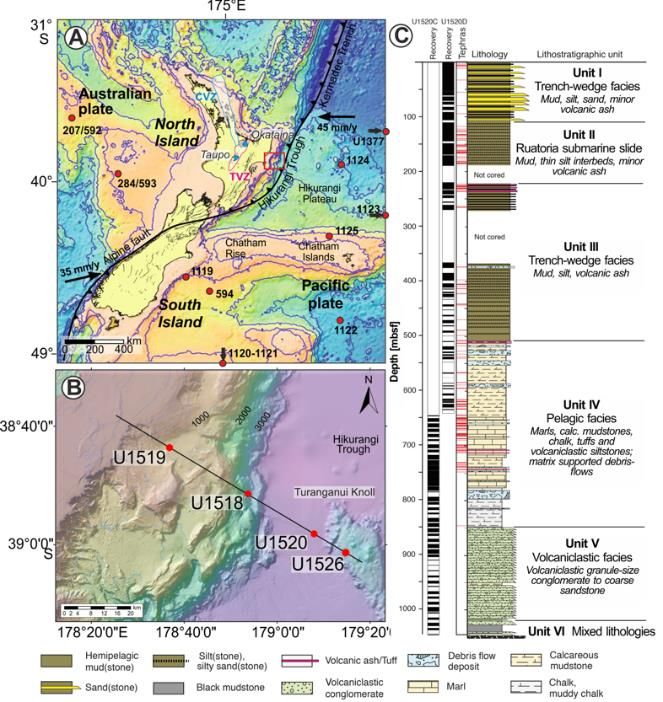
IODP/ICDP Kolloquium Köln vom 18.03. – 20.03.2019

Name      Vorname         Institution und Ort
Surname   Given Name      Affilation and Place

                          Helmholtz-Zentrum Potsdam Deutsches GeoForschungsZentrum - GFZ, Potsdam

                          Geowissenschaften (FB5 Uni Bremen), Bremen

                          Institut für Geowissenschaften (Uni Heidelberg), Heidelberg

                          Helmholtz-Zentrum Potsdam Deutsches GeoForschungsZentrum - GFZ, Potsdam

                          Helmholtz-Zentrum Potsdam Deutsches GeoForschungsZentrum - GFZ, Potsdam

                          Institut für Geowissenschaften (Uni Heidelberg), Heidelberg

                          Institut für Geologie und Mineralogie (Uni Köln), Köln

                          Institut für Geologie (Uni Hamburg), Hamburg

                          Alfred-Wegener-Institut Helmholtz Zentrum für Polar- und Meeresforschung,
                          Bremerhaven
                          Institut für Geowissenschaften (Uni Heidelberg), Heidelberg

                          Institut für Geowissenschaften (Uni Heidelberg), Heidelberg

                          Institut für Geowissenschaften (IfG Geophysik - Uni Kiel), Kiel

                          Zentrum für Marine Umweltwissenschaften (MARUM), Bremen

                          Institut für Geowissenschaften (IfG - Uni Kiel), Kiel

                          Institut für Erdwissenschaften, Universität Graz, A-8010 Graz

                          Helmholtz-Zentrum für Ozeanforschung (GEOMAR), Kiel

                          Alfred-Wegener-Institut Helmholtz Zentrum für Polar- und Meeresforschung,
                          Bremerhaven
                          CAU Kiel, Leibniz Laboratory for Radiometric Dating and Stable Isotope Research, Kiel

                          Institut für Geophysik und Geoinformatik (TU Freiberg), Freiberg

                          Das GeoZentrum Nordbayern (Uni Erlangen), Erlangen

                          Institut für Geologie und Mineralogie (Uni Köln), Köln

                          Institut für Geowissenschaften (IfG Geophysik - Uni Kiel), Kiel

                          Institut für Umweltphysik (Uni Heidelberg), Heidelberg

                          Institut für Mineralogie (Uni Hannover), Hannover

                          Institut für Geowissenschaften (Uni Heidelberg), Heidelberg

                          Bundesanstalt für Geowissenschaften und Rohstoffe, Hannover

                          Senckenberg Biodiversität und Klima Forschunsgzentrum (BiK-F), Frankfurt am Main

                          Deutsche Forschungsgemeinschaft (DFG), Bonn

                          Helmholtz-Zentrum Potsdam Deutsches GeoForschungsZentrum - GFZ, Potsdam

                          Institut für Geographie und Geologie (Uni Greifswald), Greifswald

                          Institut für Geologie und Mineralogie (Uni Köln), Köln

                          Steinmann Institut für Geologie, Mineralogie und Paläontologie (Uni Bonn), Bonn

                          Institut für Erdwissenschaften, Universität Graz, Graz

                          Institut für Mineralogie (Uni Hannover), Hannover

                          Mineralogie, Petrologie und Geochemie (Uni München), München

                          Helmholtz-Zentrum Potsdam Deutsches GeoForschungsZentrum - GFZ, Potsdam

                          Institut für Geowissenschaften (IfG - Uni Kiel), Kiel

                          Senckenberg Centre for Human Evolution and Palaeoenvironment (SHEP) , Frankfurt
                          am Main
                          Helmholtz-Zentrum Potsdam Deutsches GeoForschungsZentrum - GFZ, Potsdam

                                 Seite - Page 9
IODP/ICDP Kolloquium Köln vom 18.03. – 20.03.2019

Name      Vorname         Institution und Ort
Surname   Given Name      Affilation and Place

                          Helmholtz-Zentrum Potsdam Deutsches GeoForschungsZentrum - GFZ, Potsdam

                          Institut für Geophysik und Geologie (IGG - Uni Leipzig), Leipzig

                          Helmholtz-Zentrum für Ozeanforschung (GEOMAR), Kiel

                          Institut für Geologie und Mineralogie (Uni Köln), Köln

                          Institut für Geologie und Mineralogie (Uni Köln), Köln

                          Max-Planck-Institut für Chemie (Mainz), Mainz

                          Helmholtz-Zentrum Potsdam Deutsches GeoForschungsZentrum - GFZ, Potsdam

                          Helmholtz-Zentrum Potsdam Deutsches GeoForschungsZentrum - GFZ, Potsdam

                          Institut für Geowissenschaften (Uni Heidelberg), Heidelberg

                          Institut für Geologie und Mineralogie (Uni Köln), Köln

                          Institut für Erdwissenschaften, Universität Graz, Graz, Austria

                          Bundesanstalt für Geowissenschaften und Rohstoffe, Berlin-Spandau

                          Institut für Geologie und Mineralogie (Uni Köln), Köln

                          Institut für Geowissenschaften (Uni Jena), Jena-Stadt

                          Institut für Geologie und Mineralogie (Uni Köln), Köln

                          Institut für Geowissenschaften (IfG - Uni Kiel), Kiel

                          Geowissenschaften (FB5 Uni Bremen), Bremen

                          Zentrum für Marine Umweltwissenschaften (MARUM), Bremen

                          Zentrum für Marine Umweltwissenschaften (MARUM), Bremen

                          Alfred-Wegener-Institut Helmholtz Zentrum für Polar- und Meeresforschung, Potsdam

                          Institut für Geowissenschaften (IfG - Uni Kiel), Kiel

                          Institut für Geologie und Mineralogie (Uni Köln), Köln

                          Institut für Geographiedidaktik (Uni Köln), Köln

                          Helmholtz-Zentrum Potsdam Deutsches GeoForschungsZentrum - GFZ, Potsdam

                          Helmholtz-Zentrum für Ozeanforschung (GEOMAR), Kiel

                          Institut für Geowissenschaften (IfG - Uni Kiel), Kiel

                          Helmholtz-Zentrum Potsdam Deutsches GeoForschungsZentrum - GFZ, Potsdam

                          Zentrum für Marine Umweltwissenschaften (MARUM), Bremen

                          Institut für Geologie (Uni Hamburg), Hamburg

                          Mikropäläontologie - Fachbereich Geowissenschaften (Uni Tübingen), Tübingen

                          Geowissenschaften (FB5 Uni Bremen), Bremen

                          Helmholtz-Zentrum Potsdam Deutsches GeoForschungsZentrum - GFZ, Potsdam

                          Institut für Geosysteme und Bioindikation (TU Braunschweig), Braunschweig

                          Institut für Geowissenschaften (IfG - Uni Kiel), Kiel

                          Institut für Geologische Wissenschaften (FU Berlin), Berlin

                          Geowissenschaften (FB5 Uni Bremen), Bremen

                          Institut für Ökosystemforschung (ÖSF - Uni Kiel), Kiel

                          Institut für Geophysik und Geoinformatik (TU Freiberg), Freiberg

                          Deutsche Forschungsgemeinschaft (DFG), Bonn

                          Geowissenschaften (FB5 Uni Bremen), Bremen

                                 Seite - Page 10
IODP/ICDP Kolloquium Köln vom 18.03. – 20.03.2019
Name Vorname Institution und Ort
Surname Given Name Affilation and Place
Alfred-Wegener-Institut Helmholtz Zentrum für Polar- und Meeresforschung,
Bremerhaven
Steinmann Institut für Geologie, Mineralogie und Paläontologie (Uni Bonn), Bonn
Helmholtz-Zentrum für Ozeanforschung (GEOMAR), Kiel
Geowissenschaften (FB5 Uni Bremen), Bremen
Independent Oil&Gas Consultant, Ratingen
Institut für Mineralogie (Uni Hannover), Hannover
Helmholtz-Zentrum für Ozeanforschung (GEOMAR), Kiel
Deutsche Forschungsgemeinschaft (DFG), Bonn
Institut für Geowissenschaften (Uni Heidelberg), Heidelberg
Helmholtz-Zentrum für Ozeanforschung (GEOMAR), Kiel
Angewandte Geophysik und geothermische Energie E.ON Energy Research Center
(RWTH Aachen), Aachen
Institut für Biochemie und Biologie (Uni Potsdam), Potsdam
Geowissenschaften (FB5 Uni Bremen), Bremen
Alfred-Wegener-Institut Helmholtz Zentrum für Polar- und Meeresforschung,
Bremerhaven
Leibniz-Institut für Angewandte Geophysik (LIAG), Hannover
Bundesanstalt für Geowissenschaften und Rohstoffe, Hannover
Senckenberg Biodiversität und Klima Forschunsgzentrum (BiK-F), Frankfurt am Main
Institut für Geographie und Geologie (Uni Greifswald), Greifswald
Geowissenschaften (FB5 Uni Bremen), Bremen
Institut für Geowissenschaften (Uni Frankfurt), Frankfurt am Main
Institut für Geologie und Mineralogie (Uni Köln), Köln
Heriot-Watt University, Edinburgh, UK
Helmholtz-Zentrum Potsdam Deutsches GeoForschungsZentrum - GFZ, Potsdam
Zentrum für Marine Umweltwissenschaften (MARUM), Bremen
Institut für Geowissenschaften (IfG - Uni Kiel), Kiel
Institut für Geologie und Mineralogie (Uni Köln), Köln
Zentrum für Marine Umweltwissenschaften (MARUM), Bremen
Helmholtz-Zentrum Potsdam Deutsches GeoForschungsZentrum - GFZ, Potsdam
Institut für Mineralogie (Uni Münster), Münster
Leibniz-Institut für Angewandte Geophysik (LIAG), Hannover
Leibniz-Institut für Angewandte Geophysik (LIAG), Hannover
Zentrum für Marine Umweltwissenschaften (MARUM), Bremen
Institut für Mineralogie (Uni Hannover), Hannover
Zentrum für Marine Umweltwissenschaften (MARUM), Bremen
Institut für Geographie und Geologie (Uni Würzburg), Würzburg
Seite - Page 11IODP/ICDP Kolloquium Köln vom 18.03. – 20.03.2019
Fahrtberichte und Kurzfassungen – Cruise Reports and Abstracts
Fahrtberichte – Cruise Reports
AUTOREN TITEL SPP SEITE
PRIORITY PAGE
AUTHORS TITLE PROGRAM
Philipp A. Brandl, Anna Kutovaya,
Lucy Schlicht, Karen Strewlow, Chao IODP Expedition 376 Brothers Arc Flux IODP 21
Zhang, IODP Expedition 376 Scientists
Oliver Esper, Juliane Müller, Oscar E. IODP Expedition 374: Ross Sea West Antarctic Ice Sheet
IODP 22
Romero History
Unlocking the secrets of slow slip by integrating core data,
Steffen Kutterolf, Matt J. Ikari, André seismic and mechanical experiments, as well as borehole
IODP 23
Huepers, Expedition 372&375 scientists observatories at the offshore Hikurangi subduction zone,
IODP Expeditions 372 & 375
Joana Seguin, Kostas Panagiotopoulos,
Aleksandra Cvetkoska, A. Oflaz, D. IODP Expedition 381: Development of the active Corinth
IODP 24
Shillington , L. McNeill, Expedition 381 Rift
Scientists
Kurzfassungen - Abstracts
SPP
AUTOREN TITEL PRIORITY SEITE
AUTHORS TITLE PROGRAM PAGE
Karsten Adler , Marshal Alawi, Qi Liu,
Horst Kämpf, Robert Bussert, Birgit Present and past microbial signatures in deep sediments of
ICDP 26
Plessen, Hans-Martin Schulz, Dirk the Hartoušov CO2 mofette system, NW Bohemia
Wagner, Kai Mangelsdorf
Shallow subduction zone serpentinization traps fluid-mobile
Elmar Albers, Wolf-Achim Kahl, Lena
elements: implications for element mobilization from IODP 26
Beyer, Wolfgang Bach
serpentinite mud volcanism (IODP Exp. 366)
Frederik J. Allstädt, Erwin Appel, Paleomagnetic and palynological investigations of a new
Wolfgang Rösler, Alexander Plio-Pleistocene drill core from paleolake Idaho ICDP 27
Prokopenko, Jörg Pross (Northwestern United States)
Eleni Anagnostou, Martin Frank, Ed Antarctic Ice Sheet and carbon cycle dynamics at the late
ICDP 27
Gasson, Paul Pearson Eocene to early Oligocene
Fenna Bergmann, Volkhard Spieß, The HimalFan project – The Quantification of Himalayan
Tilmann Schwenk, Christian France- Erosion Fluxes from the Bengal Fan record based on IODP 27
Lanord seismic stratigraphy and geochemical analyses
Cécile L. Blanchet, Hana Jurikova,
Daniella Müller, Ina Neugebauer, Rik PRO-HYDRO: Sediment provenance and past hydrological
ICDP 28
Tjallingii, Markus Schwab, Achim balance in the Dead-Sea region during the Early Holocene
Brauer
Patrick Blaser, Marcus Gutjahr, Frerk
Pore fluid - seawater exchange of rare earth elements in the
Pöppelmeier, Stefanie Kaboth, Martin IODP 28
Labrador Sea since the Last Glacial
Frank, Jörg Lippold
Seite - Page 12IODP/ICDP Kolloquium Köln vom 18.03. – 20.03.2019
SPP
AUTOREN TITEL PRIORITY SEITE
AUTHORS TITLE PROGRAM PAGE
Lisa Bretschneider, Ed C. Hathorne,
Martin Frank, Julia Lübbers, Karlos G. Indian Monsoon induced erosion during the Miocene
IODP 28
D. Kochhann, Ann Holbourn, recorded at IODP Site U1443 (Exp. 353)
Wolfgang Kuhnt
Swaantje Brzelinski, Oliver Friedrich, Mechanisms of glacial/interglacial climate variability
IODP 29
André Bornemann during the Late Oligocene
Thomas Burschil, David C. Tanner,
Genese eines der tiefsten Tälern der Ostalpen: Das quartäre
Jürgen M. Reitner, Hermann Buness, ICDP 29
Lienzer Becken
Gerald Gabriel
Francisco Cáceres, Bettina Scheu,
Fabian Wadsworth, Mathieu
Controls on outgassing versus the formation of
Colombier, Kai-Uwe Hess, Claudio
impermeable networks during heating-induced vesiculation ICDP 30
Madonna, Corrado Cimarelli, Melanie
in rhyolitic magma
Kaliwoda, Bernhard Ruthensteiner,
Donald B. Dingwell
Maria Carolina A. Catunda, André
Could decreased thermocline stratification drive ice-sheet
Bahr, Stefanie Kaboth-Bahr, Oliver IODP 30
build up during the Mid-Pleistocene Transition?
Friedrich
Edoardo Dallanave, Liao Chang, Magnetostratigraphic framework for IODP Expedition 371
Rupert Sutherland, Gerald R. Dickens, (Tasman Frontier Subduction Initiation and Paleogene IODP 31
Peter Blum, Exp. 371 Scientists Climate): preliminary results.
Timothy Davis, Eleonora Rivalta Can we predict fluid pathways in the crust? ICDP 31
A test of the Limacina Dissolution Index (LDX) as proxy
Hanaa Deik, Lars Reuning for aragonite saturation of surface waters at Site U1460, SW IODP 31
Shelf of Australia
David DeVleeschouwer, Carl Richter,
Kara Bogus, Richard W. Hobbs, Brian
T. Huber, Maximilian Vahlenkamp,
An astrochronology for the lower to middle Eocene of the
Sietske J. Batenburg, Kirsty M. Edgar,
Mentelle Basin (Australia) and its implications for the IODP 32
Emma Hanson, Mathieu Martinez,
geologic time scale
Heiko Pälike , Kenneth G. MacLeod,
Yong-Xiang Li, and Expedition 369
Scientific Participants
Palaeoenvironmental Messages from Lake Teletskoye,
Bernhard Diekmann, Natalya Rudaya Sibirian Altay Mountains: State of Findings and future ICDP 32
Perspectives .
Elisabeth Dietze, Andrei Andreev, Kai
Mangelsdorf, Cornelia Karger, Ellen C.
Reconstruction of glacial to interglacial biomass burning of
Hopmans, Laura T. Schreuder, Dirk ICDP 32
northeastern Siberia during the last 270 kyrs
Sachse, Oliver Rach, Norbert
Nowaczyk, Ulrike Herzschuh
Carsten Dinske, Jörn Kummerow, Rupture Imaging and Directivity of the 2014 M5.5
ICDP 33
Serge A. Shapiro, Hiroshi Ogasawara Earthquake Below a Gold Mine in Orkney, South Africa
Catherine Drinkorn, Jan Saynisch- Transport, Removal and Accumulation of sediments
Wagner, Gabriele Uenzelmann-Neben, Numerically Simulated for Paleo-Oceans and Reconstructed IODP 33
Moran Thomas from cores of The Eirik Drift (TRANSPORTED)
Anna Joy Drury, Thomas Westerhold, Achieving a global late Miocene stable oxygen isotope
IODP 34
David Hodell, Roy Wilkens reference stratigraphy spanning 8.00-5.33 Ma
Seite - Page 13IODP/ICDP Kolloquium Köln vom 18.03. – 20.03.2019
SPP
AUTOREN TITEL PRIORITY SEITE
AUTHORS TITLE PROGRAM PAGE
Differentiating local from regional climate signals using the
Walter Düsing, Martin Trauth , Norbert
~600 ka Chew Bahir paleoclimate record from South ICDP 34
Marwan, Hauke Kraemer, Alan Deino
Ethiopia
Benjamin Eickmann, Ilka C. Cr isotopes in 2.5 to 2.0 billion-year-old sediments from
Kleinhanns, Mark van Zuilen, Ronny Fennoscandia as tracer for Paleoproterozic atmospheric ICDP 34
Schönberg oxygen levels
Agathe M. Eijsink, Matt J. Ikari, Laura
M. Wallace, Demian M. Saffer, Philip Plate-rate frictional behavior of sediment inputs to the
M. Barnes, Ingo A. Pecher, Katerina Hikurangi subduction margin: which lithologies cause slow
IODP 35
Petronotis, Leah J. LeVay, IODP slip events?
Expedition 375 Scientists, and IODP
Expedition 372 Scientists
Combined micropaleontological and biogeochemical
Oliver Esper, Juliane Müller, Gesine
reconstruction of Late Miocene Ross Sea (Southern Ocean) IODP 35
Mollenhauer
paleoenvironmental conditions
Oman Drilling Project: Cooling rates of the lower oceanic
Kathi Faak ICDP 35
crust determined from diffusion chronometry
Verena E. Förster, Asfawossen Asrat,
Andrew S. Cohen, Daniel M.
Deocampo, Christina Günter, Henry F. Deciphering climate information from authigenic mineral
ICDP 36
Lamb, Thorsten Malek, Frank transformations in the Chew Bahir sediment cores
Schaebitz, Martin H. Trauth, HSPDP
Science Team
Eberhard Gischler, Flavio S. Geomorphology of the Belize Barrier Reef margin: a survey
IODP 36
Anselmetti for IODP drilling
A Revised Core-Seismic Integration in the Molloy Basin
Jens Gruetzner, Wolfgang H. Geissler,
(ODP Site 909): Implications for the History of Ocean IODP 37
Catalina Gebhardt, Jens Matthiessen
Circulation in the Arctic-Atlantic Gateway
Jens Gruetzner, Francisco Jiménez-
Orbital Variations of Sediment Provenance and Deep Water
Espejo , Ian R. Hall , Leah J. LeVay,
Flow in the Indian-Atlantic Ocean Gateway Investigated
Gabriele Uenzelmann-Neben, IODP 37
with Physical Property and XRF Data from IODP Site
Nambiyathodi Lathika , and the IODP
U1475 (Agulhas Plateau)
Expedition 361 Scientists
Christina Günter, Asfawossen Asrat,
Andrew S. Cohen, Daniel M.
Deocampo, Annett Junginger, Henry F. Deriving paleoclimatic information from the degree of
ICDP 37
Lamb, Thorsten Malek, Frank authigenic mineral alteration
Schaebitz, Martin H. Trauth, Verena E.
Foerster
Torsten Haberzettl, Junbo Wang,
Liping Zhu, Gerhard Daut, Volkhard
Spiess, Nora Schulze, Daniel Ariztegui,
The Nam Co Drilling Project, Tibet (NamCore): A one
Natasha Barbolini, Leon Clarke, ICDP 38
million year sedimentary record from the third pole
Andrew Henderson, Jerome van der
Woerd, Hendrik Vogel, Nicolas
Waldmann
Annette Hahn, Mitchell W. Lyle, Peter
The analytical performance of handheld XRF tested using
D. Clift, Denise K. Kulhanek, Melanie IODP 38
marine sediments of IODP Expedition 355
G. Bowen
Seite - Page 14IODP/ICDP Kolloquium Köln vom 18.03. – 20.03.2019
SPP
AUTOREN TITEL PRIORITY SEITE
AUTHORS TITLE PROGRAM PAGE
From inorganic aragonite to skeletal calcite: Climate as a
Maximilian Hallenberger, Lars
major control on carbonate mineralogy during the late IODP 38
Reuning
Quaternary, NW-Shelf of Australia (NWS)
Ascelina Hasberg, Martin Melles, P. Sediment core analyses from ICDP TDP Site 2, Lake
Held, Volker Wennrich, Stephan Optiz, Towuti (Indonesia): Characterization of mass movement
ICDP 39
Hendrik Vogel, James M. Russell, S. deposits today and in the past - which information can we
Bijaksana, ICDP-TDP Scientific Party gain for other (lake) sediment studies?
Ed Hathorne, Martin Frank Open Ocean Antarctic Intermediate Water Variability IODP 40
Katja Heeschen, Ingo Pecher, Stefan
Schlömer, Marta Torres, E. Screaton, IODP Site U1517: Insights from hydrocarbon
A. Georgiopoulou, J. Mountjoy, S. measurements into the gas-hydrate bearing slope sediments
IODP 40
Mayanna, J. M. Schicks, P. Barnes, L. at the Toaheni Landslide Complex (TLC) offshore New
LeVay, and Expedition 372 and 375 Zealand.
Science Parties
Boreal forest bi-stability around Lake El’gygytgyn (NE
Ulrike Herzschuh ICDP 40
Russia) during interglacial of the last 2.15 Million years
The Lomati water tunnel, a perfect complement to the
Christoph Heubeck, BASE Team BASE Drilling Program (Paleoarchean, Barberton ICDP 41
Greenstone Belt, South Africa)
Ann Holbourn, Sebastian Beil, Janika
Jöhnck, Julia Lübbers, Wolfgang Late Miocene evolution of the Australian Monsoon: New
Kuhnt, Yair Rosenthal, Denise sediment archives from IODP Expedition 363 - Western IODP 41
Kulhanek, and Expedition 363 Pacific Warm Pool
Scientists
Andre Hüpers, Lukas Bublies, Simone
Boron and Lithium isotope geochemistry of pore waters in
Kasemann, Anette Meixner, Achim IODP 42
subduction inputs to the Sumatra subduction zone
Kopf
Sea-level change across the Plio-Pleistocene intensification
Kim Alix Jakob, Paul A. Wilson, Jörg
of Northern Hemisphere Glaciation: Reconciling signals IODP 42
Pross, Jens Fiebig, Oliver Friedrich
from the Eastern Equatorial Pacific and the North Atlantic
Elena Jovanovska, Björn Stelbrink,
Jeffery Stone, Bert Van Bocxlaer, Integrating neontology and paleontology to unravel the
ICDP 43
Thomas Wilke, Friedemann Schrenk, evolution of diatoms in the East African Rift lakes
Christian Albrecht
Hana Jurikova, Cécile Blanchet, Rik Tracing sediment provenance and hydrological balance in
Tjallingii, Markus Schwab, Michael the Levant during the Holocene using geochemical ICDP 43
Henehan, Achim Brauer fingerprints
Janna Just, Sarina Golze, Stephen
Pleistocene East African terrestrial environmental
Barker, Ian R. Hall, Sidney Hemming,
conditions and reduced glacial NADW flow in the northern IODP 43
Leah J. LeVay, Expedition 361
Mozambique Channel (IODP Site U1476)
Scientists
Jens Kallmeyer, André Friese, Kohen
Bauer, Clemens Glombitza, Luis
Ordonez, Daniel Ariztegui, Verena B.
Heuer, Aurèle Vuillemin, Cynthia
Methanogenesis dominates organic matter mineralization in
Henny, Sulung Nomosatryo, Dirk ICDP 44
modern ferruginous sediments
Wagner, Satria Bijaksana, Hendrik
Vogel, Martin Melles, James M.
Russell, Sean A. Crowe, and the
Towuti Drilling Project Science Team
Seite - Page 15IODP/ICDP Kolloquium Köln vom 18.03. – 20.03.2019
SPP
AUTOREN TITEL PRIORITY SEITE
AUTHORS TITLE PROGRAM PAGE
Felix Kästner, Simona Pierdominici, Core-log-seismic data integration to improve the seismic
Judith Elger, Christian Berndt, Jochem stratigraphy within the ICDP drilling project COSC-1, ICDP 44
Kück Sweden: challenges and first results
Oliver A. Kern, Andreas
Koutsodendris, Bertil Mächtle, Application of XRF core scanning to peat and other
ICDP 44
Christian Scholz, Gerd Schukraft, Jörg organic-rich sediments
Pross
Investigation of the fractal dimension of cataclasites in
Sabine Kölln, Olaf Konrad, Ulrich
target rocks of the Chicxulub impact crater (Mexico) using ICDP 45
Riller
SAGA GIS image analysis
Availability of reactive iron for microbial iron reduction
Male Köster, Susann Henkel, M.-Y.
and assessment of the diagenetic overprint of sediments
Tsang, M. Kars, H. Manners, Verena IODP 45
within the deep subseafloor biosphere in the Nankai
B. Heuer, F. Inagaki, Y. Morono
Trough, Japan – IODP Expedition 370
Ilias Kousis, Andreas Koutsodendris, Centennial-scale vegetation dynamics and climate
Odile Peyron, Bernd Wagner, Jörg variability in SE Europe during Marine Isotope Stage 12 ICDP 46
Pross based on a pollen record from Lake Ohrid
Wolfgang Kuhnt, Janika Joehnck, Julia Indian Ocean circulation and monsoon variability across
Luebbers, Ann Holbourn, Karlos G.D. late Neogene climate transitions: New insights from
IODP 46
Kochhann, Nils Andersen, Steven C. intermediate and deep water sediment archives in the
Clemens, Clara Bolton Andaman Sea and on the Ninetyeast Ridge
Tephrochronostratigraphy in marine and terrestrial
Steffen Kutterolf, Jenni Hopkins sediments of New Zealand: Benchmark for Miocene to IODP 47
Quaternary explosive volcanism
Frank Lamy, Gisela Winkler, Carlos A. International Ocean Discovery Program Expedition 383 Dynamics
IODP 47
Alvarez Zarikian of the Pacific Antarctic Circumpolar Current (DYNAPACC)
Indian Summer Monsoon variability across Termination I
Stefan Lauterbach, Nils Andersen,
based on the stable hydrogen isotope composition (?D) of
Thomas Blanz, Philippe Martinez, IODP 48
terrestrial plant leaf wax n-alkanes from IODP Site U1446
Ralph Schneider
(Bay of Bengal)
Vera Lay, Stefan Buske, Sascha
Bodenburg, John Townend, Richard
Kellett, Martha Savage, Jennifer 3D-VSP experiment at the Alpine Fault DFDP-2 drill site in
ICDP 48
Eccles, Doug Schmitt, Alexis Whataroa, New Zealand
Constantinou, Malcom Bertram, Kevin
Hall, Don Lawton, Andrew Gorman
Niklas Leicher, Bernd Wagner, Biagio
Giaccio, Giovanni Zanchetta,
Stephanie Scheidt, Lorenzo Monaco, Tephrostratigraphy and tephrochronology of a 430 ka
ICDP 49
Elenora Regattieri, Sebastien Nomade, sediment record from the Fucino Basin, central Italy
Alison Pereira, Thomas Wonik,
Elizabeth Niespolo, Paul Renne
Jasmin M. Link, Norbert Frank, Patrick
Blaser, Frerk Pöppelmeier, Jörg
Interhemispheric Gradient of Nd isotopes in the Deep
Lippold, Kim A. Jakob, Oliver IODP 50
Atlantic Ocean since 800 ka
Friedrich, Marcus Gutjahr, Anne H.
Osborne, Martin Frank
Jasmin M. Link, Norbert Frank Atlantic-wide deep circulation patterns during MIS 11 IODP 50
Seite - Page 16IODP/ICDP Kolloquium Köln vom 18.03. – 20.03.2019
SPP
AUTOREN TITEL PRIORITY SEITE
AUTHORS TITLE PROGRAM PAGE
Sefan A. Linsler, Renat R. Almeev, Crystallization conditions of fore-arc basalts from the Izu-
IODP 51
Francois Holtz Bonin-Mariana island arc: experimental constraints
Jörg Lippold, Marcel Regelous, Mario New proposal: Marine dating of the impact crater beneath
IODP 52
Trieloff Hiawatha Glacier in Greenland
Tina Lüdecke, Ottmar Kullmer,
Early hominin dietary adaptation in diverse savanna
Andreas Mulch, Friedemann Schrenk, ICDP 53
ecosystems
Oliver Sandrock, Jens Fiebig
Andrea Miebach, Chunzhu Chen, A 150,000-Year Vegetation and Climate History: The New
ICDP 53
Thomas Litt Dead Sea Pollen Record
Dominik Mock, Benoît Idlefonse,
New Insights into Lower Crustal Accretion at Fast-
Dieter Garbe-Schönberg, Samuel
Spreading Mid-Ocean Ridges – Petrological and
Müller, David A. Neave, Jürgen IODP 53
Microstructural Results from the ICDP Oman Drilling
Koepke, and Oman Drilling Project
Project
Phase 1 Science Party
Permeability’s role around magma bodies: a way for
Cristian Montanaro ICDP 54
gradually deforming or suddenly erupting
Daniela Müller, Ina Neugebauer, Rik
Tjallingii, Birgit Plessen, Markus J. Variations in the Dead Sea sediment record during extreme
ICDP 54
Schwab, Yehouda Enzel, Jawad Hasan, hydroclimatic changes
Achim Brauer
Samuel Müller, Barbara Zihlmann,
The role of hydrothermal fault zones in the lower oceanic
Rosalind M. Coggon, Dieter Garbe-
crust: Evidence from Wadi Gideah (OmanDP drill site, ICDP 55
Schönberg, Damon A.H. Teagle, Heike
Samail ophiolite, Oman)
Wenke, Jürgen Koepke
Bita Najdahmadi, Marco Bohnhoff, Imaging North Anatolian Fault Zone in the western
Yehuda Ben-Zion, Ethem Görgün, Marmara region, Turkey, with a dense local seismic ICDP 55
Esref Yalçınkaya, Hakan Alp network
Ina Neugebauer, Markus J. Schwab, TEPH-ME: CryptoTEPHrochronology in the ICDP Dead
Christine Lane, Birgit Plessen, Rik Sea deep core as a key to synchronise past hydroclimate ICDP 55
Tjallingii, Sabine Wulf, Achim Brauer changes in the eastern MEditerranean
Large-scale geoelectrical survey in the Eger Rift (W-
Tobias Nickschick, Christina Flechsig,
Bohemia) at a proposed ICDP fluid monitoring drill site to ICDP 56
Thomas Günther
image fluid-related structures
Anne H. Osborne, Martin Frank, Dick Gulf Stream hydrography during the Pliocene/Early
Kroon, James D. Wright, Marcus Pleistocene: low versus high latitude forcing of the Atlantic IODP 56
Gutjahr, Lars Reuning Meridional Overturning Circulation
Konstantinos Panagiotopoulos, Jens
Holtvoeth, R. D. Pancost, S. Faquette, Pollen- and biomarker-inferred climate at Lake Ohrid in the
ICDP 56
O. Peyron, Bernd Wagner, Martin Early Pleistocene
Melles
Simona Pierdominici, Anja Maria
Schleicher, Jochem Kück, Donald T. Petrophysical and mineralogical investigation of lacustrine
ICDP 57
Rodbell, Mark B. Abbott, the ICDP sediments from Lake Junín (Peru)
Lake Junín Working Group
Magnetotelluric measurements in West Bohemia to image
Anna Platz, Ute Weckmann the local and regional subsurface electrical conductivity ICDP 57
structure beneath the Mýtina and Neualbenreuth Maar
Seite - Page 17IODP/ICDP Kolloquium Köln vom 18.03. – 20.03.2019
SPP
AUTOREN TITEL PRIORITY SEITE
AUTHORS TITLE PROGRAM PAGE
Frerk Pöppelmeier, Markus Gutjahr,
Water mass stratification of the mid-depth Southwest
Patrick Blaser, Delia W. Oppo, Samuel IODP 57
Atlantic during the past 25,000 years
L. Jaccard, Finn Süfke, Jörg Lippold
A Late Pliocene paleorecord from the extinct Lake Idaho,
Alexander Prokopenko ICDP 58
USA – a progress report
A comparative study on calcite veins from the volcanic
sequences of the Izu-Bonin-Mariana forearc and rear arc
Dennis Quandt, Peter Micheuz, Walter
(IODP expeditions 352 and 351), and the Troodos ophiolite, IODP 58
Kurz
and their implications for the post-magmatic evolution of
supra-subduction zones
Ramon Reifenröther, Carsten Münker, Extreme W enrichment in highly serpentinised peridotites
IODP 58
Birgit Scheibner from Leg 209
Anna Reusch, Volkhard Spieß, Hanno
Results from an ICDP–related deep seismic pre–site survey
Keil, Catalina Gebhardt, ICDP 59
campaign at Lake Issyk–Kul, Kyrgyz Republic
Abdrakhmatov, Kanatbek
Influence of the Indian Summer Monsoon runoff on marine
Oscar E. Romero, Yasmin Bokhari-
productivity during middle Pliocene-early Pleistocene in the IODP 59
Friberg, Pallavi Anand
northwestern Bay of Bengal
Frank Schaebitz, Asfawossen Asrat,
Andrew S. Cohen, Jonathan R. Dean,
Alan Deino, Daniel M. Deocampo,
Walter Duesing, Verena E. Foerster,
Christina Günter, Annett Junginger, Good times for leaving home? The paleoenvironment of
Henry F. Lamb, C. Lane, Melanie J. Chew Bahir in south Ethiopia: implications for human ICDP 60
Leng, Rachel Lupien, Helen M. evolution, dispersal and technological innovation
Roberts, Christopher B. Ramsey, Jim
Russel, Emma Pearson, C. Vidal,
Martin H. Trauth, HSPDP Science
Team
Florian Schubert, Jens Kallmeyer, Tina
Exploring microbial sulphate reduction under high
Treude, IODP Exp. 370 Scientific IODP 60
temperature on samples from IODP Exp. 370
Party
Florence Schubotz, Oliver Helten,
Verena B. Heuer, Christian T. Hansen, Abiotic substrate generation and microbial-life signatures
IODP 61
Rüdiger Stein, Wolfgang Bach, Kai- close to the temperature limit of life, IODP Expedition 370
Uwe Hinrichs
Dynamics during solidification of different impact melt
Felix Schulte, Ulrich Riller ICDP 61
zones at the peak ring of the Chicxulub crater, Mexico
Nora Schulze, Volkhard Spiess,
Seismostratigraphic analysis of high-resolution 2D data
Gerhard Daut, Torsten Haberzettl, ICDP 61
from Nam Co, Tibetan Plateau
Junbo Wang, Liping Zhu
Markus J. Schwab, Yoav Ben Dor,
Moshe Armon, Marieke Ahlborn, Ina
Neugebauer, Daniela Müller, Rik Changing flood frequencies under opposing late Pleistocene
ICDP 62
Tjallingii, Efrat Morin, Yigal Erel, eastern Mediterranean climates
Yehouda Enzel, Achim Brauer, and
PALEX Scientific Team
Antje Schwalb, Volker Wittig, Rolf
Hipercorig – The new coring tool for sediments in operation ICDP 62
Bracke, Ulrich Harms, Tim Yilmaz
Seite - Page 18IODP/ICDP Kolloquium Köln vom 18.03. – 20.03.2019
SPP
AUTOREN TITEL PRIORITY SEITE
AUTHORS TITLE PROGRAM PAGE
Esther M. Schwarzenbach, Harald
Strauss, Uwe Wiechert, Timm John,
Tracking water-rock interaction at the Atlantis Massif
Janne Liebmann, Gretchen L. Früh- IODP 63
(MAR, 30°N) using sulfur geochemistry
Green, Chiara Boschi, Stéphane
Rouméjon
Tilmann Schwenk, Fenna Bergmann, Linking the evolution of the active channel-levee system on
Volkhard Spieß, Christian France- the Bengal Fan at 8°N to the surface channel pattern on the
IODP 63
Lanord, and the IODP Expedition 354 fan – Integration of results from IODP Expedition 354 Site
Scientific Party U1454 and bathymetric data
Helge Simon, Purevsuuren Enkhbataar, Seismic imaging at a PIER-ICDP fluid-monitoring site in
ICDP 64
Stefan Buske the Eger Rift zone: first results
Helge Simon, Stefan Buske, Felix
Anisotropic pre-stack depth migration at the COSC-1
Krauß, Rüdiger Giese, Peter Hedin, ICDP 65
borehole, central Sweden
Christopher Juhlin
Volkhard Spieß, Ann Holbourn, S. Reconstructing Neogene Monsoon History and
Clemens, N. Nair, A. K. Panday, A. D. Paleoceanography around India Plans for a German-Indian
IODP 66
Singh, R. Saraswatt, K. Thirumalai, B. Site Survey Initiative to support Indian Ocean Scientific
Christensen, L. Giosan Drilling
Christoph Steinhoff, Nadine Pickarski, Flow cytometry for purification of fossil pollen from Lake
ICDP 66
Thomas Litt Van for AMS radiocarbon dating – a new approach
Sebastian Steinig, Wolf Dummann,
Sascha Flögel, Thomas Wagner, Jens The circulation and carbon burial history of the Early
IODP 67
O. Herrle, Martin Frank, Peter Cretaceous South Atlantic and Southern Ocean
Hofmann
The deep architecture and magmatic-hydrothermal
Lena Steinmann, Volkhard Spieß,
processes of the Campi Flegrei caldera revealed by 3D ICDP 67
Marco Sacchi
seismics to support an amphibian ICDP-IODP effort
Implications of subsurface basaltic rock alteration on the
Marius Stranghörner, Stefan Dultz,
supply of soluble Fe to ocean surface waters – a study on ICDP 68
Harald Behrens, Axel Schippers
ICDP site Hawaii
Finn Süfke, Frerk Pöppelmeier, Patrick
Blaser, Tyler Goepfert, Marcel Evolution of the Deep Western Boundary Current inferred
IODP 69
Regelous, Marcus Gutjahr, Jens from 231Pa/230Th records
Grützner, Jörg Lippold
Ariel Thomas, Sönke Reiche,
Simulating Submarine Fresh Groundwater Preservation
Christoph Clauser, Marko Riedel, IODP 69
Offshore New Jersey
Stefan Buske
Ralph Tiedemann, Johanna Krüger,
Metabarcoding on ancient eukaryotic DNA from Chew
Katja Havenstein, Verena Förster,
Bahir, Ethiopia: Reconstruction of past biodiversity as ICDP 69
Stefanie Hartmann, Martin H. Trauth,
proxy for environmental change
Michael Hofreiter
Andreas Türke, Wolf-Achim Kahl, SUSTAIN drilling campaign campaign into Surtsey volcano
ICDP 70
Wolfgang Bach – Hydrothermal (bio-mediated) alteration of basaltic tephra
Onset and modifications in intensity and pathways of water
Gabriele Uenzelmann-Neben mass exchange between the Southeast Pacific and the South IODP 70
Atlantic with focus on the Falkland Plateau
Paleoenvironmental indications and cyclostratigraphic
Arne Ulfers, Katja Hesse, Thomas
studies of sediments from tropical Lake Towuti obtained ICDP 70
Wonik
from downhole logging
Seite - Page 19IODP/ICDP Kolloquium Köln vom 18.03. – 20.03.2019
SPP
AUTOREN TITEL PRIORITY SEITE
AUTHORS TITLE PROGRAM PAGE
Iuliana Vasiliev-Popa, Stefano Lugli, Was Mediterranean region warmer during the Messinian
ICDP 71
Andreas Mulch Salinity Crisis?
Fynn Warnke, Frank Niessen, Catalina Glacial-interglacial cycles largely control mass movement
ICDP 71
Gebhardt deposits in Lake El’gygytgyn
Thomas Westerhold, Ursula Röhl,
Towards a high-resolution orbitally-calibrated Paleogene
Steven Bohaty, Fabio Florindo,
benthic stable isotope record - new middle Eocene data IODP 71
Thomas Frederichs, James Zachos,
from ODP Site 1263 cover a key interval
Claudia Agnini
Thomas Wiersberg, Martin Zimmer,
Christian Kujawa, Bennie Liebenberg,
Investigations on fault zone gases in South African gold
Hiroshi Ogasawara, Tullis C. Onstott, ICDP 72
mines
Zachary Garvin, Errol Cason, Jan-G
Vermeulen, Esta van Heerden
Andreas Wittke, Nikolaus Gussone, Ca isotope fractionation during fluid transport through
IODP 72
Barbara M.A. Teichert sediment columns - an experimental approach
Heiko Woith, Katja Heeschen, Martin
Zimmer, Samuel Niedermann, Julien Multi-level online gas monitoring at the Hartoušov mofette:
ICDP 73
Bahr, Jakub Trubac, Jiri Vlcek, Tomas concept and technical setup
Fischer
Christian Zeeden, Arne Ulfers,
Evolutive methods in cyclostratigraphy: probing for
Matthias Sinnesael, Mingsong Li, IODP 73
Milankovic cycles in continental (complex) settings
Thomas Wonik
Chao Zhang, Juergen Koepke, Olivier Experiments on melt-peridotite interaction at crust-mantle
IODP 73
Namur boundary: Implications for heterogeneity in the lower crust
Junli Zhang, Andre Hüpers, Stefan Near lithostatic pore pressures prepare the Nankai
IODP 74
Kreiter, Achim Kopf décollement for the next megatsunami offshore SW Japan
Hydroclimate change in subtropical South Africa during the
Xueqin Zhao, Andreas Koutsodendris,
mid-Piacenzian Warm Period recorded in fynbos vegetation IODP 74
Lydie Dupont
at IODP Site U1479
Bernd Zimanowski, Ralf F. Büttner, Forschungsbohrung auf Surtsey Experimentelle
James D. L. White, Magnus T. Untersuchungen zur Entstehung und der thermischen ICDP 74
Gudmundsson Geschichte (SUSTAIN)
Seite - Page 20IODP/ICDP Kolloquium Köln vom 18.03. – 20.03.2019
Fahrtberichte – Cruise Reports extensive high temperature venting at the NW caldera wall and on the
resurgent domes. Two different types of hydrothermal venting are observed:
a seawater-dominated system at the caldera wall and an epithermal-
hydrothermal system at the resurgent cone. Magmatic volatiles are
IODP contributing directly to the latter system and the seafloor massive sulphide
deposits at Brothers are known for their high Au contents (de Ronde et al.,
IODP Expedition 376 Brothers Arc Flux 2011). However, any understanding of these specific hydrothermal systems is
hindered by the missing information from the subsurface and thus Brothers
PHILIPP A. BRANDL1, ANNA KUTOVAYA2, LUCY SCHLICHT3, KAREN STREWLOW4, was identified as a prime location for deep drilling into an arc hydrothermal
CHAO ZHANG5, IODP EXPEDITION 376 SCIENTISTS system.
In agreement with the specific challenges identified in the IODP Science
1) GEOMAR Helmholtz-Zentrum für Ozeanforschung Kiel, Wischhofstr. Plan 2013-2023, the four primary scientific objectives outlined in the
1-3, 24148 Kiel, GermanyG Expedition 376 Scientific Prospectus were to: A) characterize the sub-
2) Institute of Geology and Geochemistry of Petroleum and Coal, RWTH volcano, magma chamber-derived volatile phase to test model-based
Aachen University, Lochnerstr. 4-20, 52056, Aachen, Germany predictions that this is either a single-phase gas, or two-phase brine-vapor, B)
3) Fachbereich Geowissenschaften, Universität Bremen, Klagenfurter determine the sub-seafloor distribution of base and precious metals and
Straße 2, 28359 Bremen, Germany metalloids, and the reactions that have taken place along pathways to the
4) GEOMAR Helmholtz-Zentrum für Ozeanforschung Kiel, Wischhofstr. seafloor, C) quantify the mechanisms and extent of fluid-rock interaction, and
1-3, 24148 Kiel, Germany consequences for mass transfer of metals and metalloids into the ocean and
5) Institut für Mineralogie, Leibniz Universität Hannover, Callinstraße 3, the role of magmatically-derived carbon and sulphur species in mediating
30167 Hannover, Germany these fluxes, and D) assess the diversity, extent and metabolic pathways of
Brothers is one of thirteen major volcanic centres of the active Kermadec microbial life in an extreme, metal-toxic and acidic volcanic environment (de
arc front as part of the Tonga-Kermadec subduction system that extends from Ronde et al., 2017).
New Zealand to the islands of Tonga in the southwestern Pacific. Most of The drill sites represent hydrothermal reaction zones of geochemically
these arc volcanoes are magmatically and/or hydrothermally active making distinct fluids that are variably affected by magmatic volatile input, allowing
the Tonga-Kermadec system one of the most active arcs in the world. This, us to directly address the consequences of magma degassing for metal
however, has not been recognised in the early days because most of the transport to the seafloor and its effect on the functioning of microbial
volcanoes are submarine and accessible by deep-sea research vessels only. communities. Drilling conditions were often difficult: hole stability was
Volcanic rocks along the Kermadec arc range in composition from basalt to affected by a significant cover of unconsolidated material, and high
rhyodacite. Their trace element and radiogenic isotope compositions indicate temperatures and acidity in the borehole were challenging for the equipment.
significant magma source heterogeneity both along and across the arc that Nonetheless and in parts due to the drilling-in of casing, IODP Expedition 376
results from variable subduction of continent-derived sediments, pelagic successfully cored five, up to 450 m deep drillholes at Brothers volcano. With
sediments and oceanic crust, and/or interaction with continental crust (e.g., an average recovery rate of 18.1 %, 222 m of core were recovered, which is a
Gamble et al., 1996; Haase et al., 2002; Timm et al., 2012). Furthermore, the significant improvement relative to previous attempts of drilling into
shallower water depth of most hydrothermal arc systems as opposed to those hydrothermal systems (TAG, Pacmanus). During the expedition, a new
at mid-ocean ridges, their high volatile flux with a direct magmatic turbine-driven coring system (TDCS) developed by CDEX was tested for the
contribution and their similarity to porphyry and epithermal deposits that – on first time under real conditions.
land – are the main source of the metals our society is crucially depending on, Two sites were drilled into the northwestern caldera wall (U1527 and
make these systems highly relevant for science. Brothers with its 3.5 km wide U1530), in order to drill into the seawater-dominated hydrothermal system.
caldera, a resurgent cone and its intense hydrothermal activity make this At Site U1527, we cored down to 238 mbsf and recovered two igneous units.
volcano an ideal target for the further understanding of hydrothermal arc Igneous Unit 1 – unconsolidated pyroclastic material made up of fragments
systems. Several expeditions have studied Brothers volcano and confirmed of relatively unaltered, plagioclase-pyroxene-phyric dacite lava – overlies
Igneous Unit 2. The latter is formed by hydrothermally altered volcaniclastic
rocks, mostly lapilli-tuff and lapillistone, composed of altered dacite clasts
embedded in a fine-grained altered matrix. Altered volcaniclastic rocks such
as these were the most common lithology encountered during Expedition 376.
The alteration mineralogy of the upper part of Site U1527 indicates seawater-
rock interaction at low-temperatures < 150 °C (mainly goethite, opal CT,
zeolites), while in the lower part the mineral assemblage changes to higher
reaction temperatures ≤ 250 °C (chlorite, quartz, illite, pyrite). The general
absence of veins and indications of late fracturing suggest that alteration at
Site U1527 is not structurally controlled and may instead be due to pervasive
flow. Some zones in the deeper part of the hole show possible evidence for
crystal-plastic deformation in the form of white ribbons wrapped around
larger volcanic clasts. Site U1530 is situated above a metal-rich stockwork
zone. We cored down to 453 mbsf, recovering five igneous units. An altered
lapillistone, forming Unit 1, overlies Unit 2, which is unique amongst
lithologies recovered during Expedition 376. It is a sequence of altered
tuffaceous mud-, silt- and sandstones that display various sedimentary
textures such as grading and bedding. Sedimentary boundaries are all
subhorizontal. Altered plagioclase-phyric dacite lava forms Igneous Unit 3,
while Igneous Unit 4 consists of altered volcaniclastic rocks, mostly
lapillistone and lapilli-tuff. Igneous Unit 5 is altered volcanic rock (more
detailed classification was hindered by intense alteration) with a few
intercalated less altered plagioclase-phyric lavas. Volcanic fabrics are defined
by aligned vesicles and/or microlites and occur within clasts (not sharing a
common orientation) and over larger scales in coherent lavas, where they tend
to show dips >45°. The alteration in the upper part of Site U1530 corresponds
to the low-temperature mineral assemblage already found in the upper part of
the other drilling site at the NW Caldera U1527. At Site U1530, the low-
temperature zone is again first followed by alteration minerals pointing to
higher reaction temperatures with seawater (mainly quartz, illite, chlorite), but
in the deeper parts a mineral assemblage typical for reaction with acid-
sulphate fluids follows (dominantly diaspore, quartz, pyrophyllite). In the
Figure. :1: Map of Brothers volcano with drill locations of IODP deepest parts, the pyrophyllite-rich mineral assemblage is locally intercalated
Exp. 376 (modified from Embley et al., 2012). with chlorite-rich layers. Veins occur throughout the hole at Site U1530 and
Seite - Page 21Sie können auch lesen


