Robotic Fiber Winding - KE - Design STUDIO
←
→
Transkription von Seiteninhalten
Wenn Ihr Browser die Seite nicht korrekt rendert, bitte, lesen Sie den Inhalt der Seite unten
Robotic Fiber Winding                                                                                 En

                        ▪ Robotic Fiber Winding - KE - Design STUDIO
                            ▪    1st half of semester

                        This KE is about exploring the architectural design possibilities of the latest
                        research in robotic fabrication. The hypothesis is that each fabrication
                        method brings its own structural and formal logic. This will be creatively
                        explored in the KE through the design of a small pavilion.
                        The technology whose design space will be explored is Robotic Fiber
                        Winding, which is used as a lost formwork for extremely thin-walled
                        concrete components. This new technology has a historical reference in the
                        highly efficient ferrocement construction method of Pier Luigi Nervi, who in
                        the middle of the last century succeeded in developing an extremely
                        material-efficient manufacturing method for complex-shaped components.
                        His maxim was "strength through form", or put differently, more structural
                        performance through more geometry and less material.
                        In the KE, skills in basic digital design and manufacturing processes are
                        taught, including laser cutting, 3D desktop printing and CNC milling. With
                        these basics, the winding process can be experimentally explored by
                        manual winding on the model scale. Robotic winding on a scale of 1:1 is
                        explored in the optional subsequent seminar, where a prototype of a design
                        is realized in the Digital Building Fabrication Laboratory.

                        The Pdf file provides further details about the course structure and content on
                        the ITE website.

                        Supervision: Prof. Norman Hack, Stefan Gantner, Fatemeh Amiri
                        Kick-off: Thursday, 13.04.2023 - 10:00 – 14:00 (in Person at ITE)
                        Start Date: 13.04.2023
                        End Date: 25.05.2023
                        Regular Dates: Every Thursday (10 – 14)
                        Final Presentation: 26.05.2023
                        Language: English
                        Number of participants: 16

                        Participation Recommendation:
                        -   Knowledge of Rhino and Grasshopper is welcome, but not mandatory.
                        -   Students are highly advised to join both KE and Seminar “Robotic Fiber
                            Winding“ to follow the integral process from design to additive manufacturing
                            of a real-scale demonstrator.
                        Contact: Stefan.gantner@tu-braunschweig.de
                                  Fatemeh.amiri@tu-braunschweig.de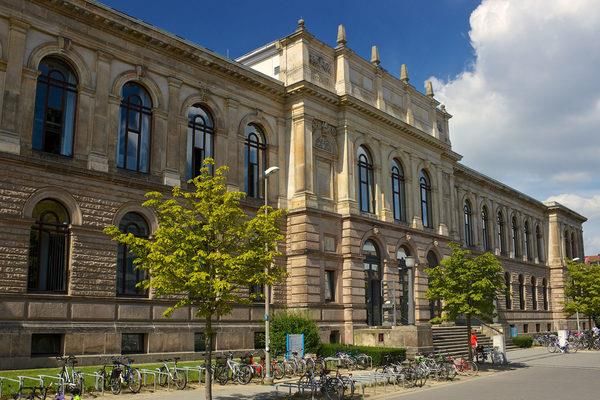
Robotic Fiber Winding                                                                          DU

                        ▪ Robotic Fiber Winding - KE - Design STUDIO
                               1st half of semester

                        In diesem KE geht es um die Erforschung der architektonischen
                        Gestaltungsmöglichkeiten neuester Forschungsergebnisse im Bereich der
                        Roboterfertigung. Die Hypothese ist, dass jede Fabrikationsmethode ihre
                        eigene strukturelle und formale Logik mit sich bringt. Diese soll in dem KE
                        durch den Entwurf eines kleinen Pavillons kreativ erforscht.
                        Die Technologie, deren Gestaltungsraum erforscht werden soll, ist das
                        Robotic Fibre Winding, das als verlorene Schalung für extrem
                        dünnwandige Betonteile eingesetzt wird. Diese neue Technologie hat
                        einen historischen Bezug in der hocheffizienten Ferrozementbauweise von
                        Pier Luigi Nervi, dem es Mitte des letzten Jahrhunderts gelang, eine
                        äußerst materialeffiziente Herstellungsmethode für komplex geformte
                        Bauteile zu entwickeln. Seine Maxime war "Strength through Form", d.h.
                        mehr strukturelle Leistungsfähigkeit durch mehr Geometrie und weniger
                        Material.
                        In dem KE werden Kenntnisse über grundlegende digitale Konstruktions-
                        und Fertigungsverfahren vermittelt, darunter Lasercutting, 3D-Desktopdruck
                        und CNC-Fräsen. Mit diesen Grundlagen kann der Wickelprozess durch
                        manuelles Wickeln im Modellmaßstab experimentell erkundet werden. Das
                        robotergestützte Wickeln im Maßstab 1:1 wird im optionalen
                        Folgeseminar erkundet, in dem der Prototyp eines Entwurfs im Digital
                        Building Fabrication Laboratory realisiert wird.

                        Die Pdf-Datei enthält weitere Einzelheiten über die Struktur und den Inhalt
                        des Kurses auf der ITE-Website.

                        Betreuung: Prof. Norman Hack, Stephen Gantner, Fatemeh Amiri
                        Kick-off: Donnerstag, 13.04.2023 - 10:00 - 14:00 (persönlich im ITE)
                        Anfangsdatum: 13.04.2023
                        Endtermin: 25.05.2023
                        Regelmäßige Termine: Jeden Donnerstag von, 10 - 14 Uhr
                        Abschlusspräsentation: 26.05.2023
                        Sprache: Englisch
                        Anzahl der Teilnehmer: 16

                        Empfehlung zur Teilnahme:
                        -      Kenntnisse in Rhino und Grasshopper sind willkommen, aber keine
                        Voraussetzung für die Teilnahme.
                        -      Studenten wird dringend empfohlen, sowohl den KE als auch das
                        Seminar "Robotic Fiber Winding" zu besuchen.

                        Kontakt: Stefan.gantner@tu-braunschweig.de
                                   Fatemeh.amiri@tu-braunschweig.de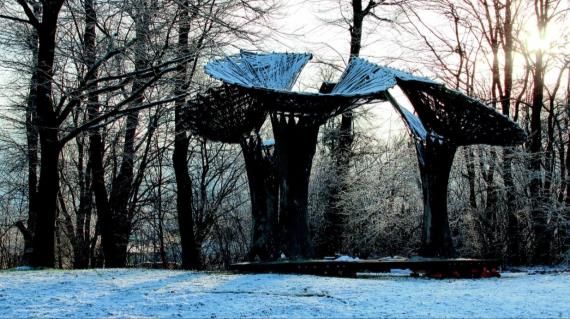
En
Robotic Fiber Winding

                        ▪ Robotic Fiber Winding - Seminar - Fabrication
                                1st half of semester

                        Help us to shape the future of construction by means of additive
                        manufacturing (3D-printing). Take on the role of the researcher and thereby
                        experience novel digital fabrication techniques in the most intuitive way
                        possible. Together with our robots, we will build a 1:1 small pavilion
                        based on the final designs of the preceding KE "Robotic Fiber Winding".
                        Specifically, the technique of Robotic Fiber Winding for reinforcing 3d-
                        printed concrete elements will be applied here. Findings from the
                        preceding KE will be translated to robotic motion and new toolings (e.g.
                        wooden frames) will be handcrafted accordingly.
                        The foundation for this course was laid by ITE's research on the integration
                        of individualized prefabricated fiber reinforcement in Additive
                        Manufacturing Construction (AMC). It aims to fully unlock the inherent
                        potentials of 3D printing, that is to foster material efficient, structurally
                        optimized, and hence sustainable constructions. Automated fabrication
                        processes for the integration of structural fiber reinforcement for additively
                        fabricated concrete elements have been developed over the past four
                        years. Focusing on innovative fibrous materials instead of conventional
                        steel rebars opens up new challenges same as opportunities encouraging
                        architects to score unprecedented structural performance and explore
                        unseen potentials in architectural expression at the same time.
                        In this course, you will get insights into all the relevant steps of an AMC
                        process. Furthermore, you will gain in-depth knowledge by choosing a
                        focus group. Examples are the management of large-scale experiment
                        conduction, robotic path planning, prototypic manufacturing of toolings
                        and analysis of material behavior.

                        The Pdf file provides further details about the course structure and content
                        on the ITE website.

                        Supervision: Prof. Norman Hack, Stefan Gantner, Fatemeh Amiri
                        Kick-off: Thursday, 08.06.2023 - 10:00 – 14:00 (in Person at DBFL)
                        Start Date: 08.06.2023
                        End Date: 20.07.2023
                        Regular Dates: Every Thursday from 10:00 to 14:00
                        Final Presentation: 21.07.2023
                        Language: English
                        Number of participants: 16
                        Participation Recommendation:
                        -   Knowledge of Rhino and Grasshopper is welcome, but not mandatory.
                        - Students are highly advised to join both KE and Seminar „Robotic Fiber
                        Winding“ to follow the integral process from design to additive
                        manufacturing of a real-scale demonstrator.
                        Contact:Stefan.gantner@tu-braunschweig.de,
                                 Fatemeh.amiri@tu-braunschweig.de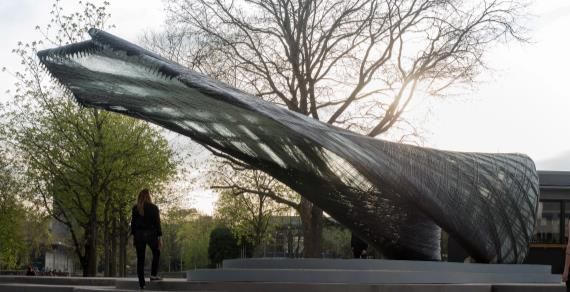
Robotic Fiber Winding                                                                          DU

                        ▪ Robotic Fiber Winding - Seminar - Fabrication
                               1est half of semester

                        Gestalte die Zukunft des Bauens mithilfe additiver Fertigung (3D-Druck)!
                        Mit uns wirst du direkt an der Forschung teilhaben und dabei jüngste
                        digitale Fabrikationstechniken auf intuitive Art und Weise kennenlernen.
                        Gemeinsam mit unseren Robotern werden wir einen 1:1-Demonstrator auf
                        Basis der finalen Entwürfe des zuvor stattfindenden KEs "Robotic Fiber
                        Winding" fertigen. Konkret wird hier die Technik des Robotic Fiber
                        Windings zur Bewehrung von 3D-gedruckten Betonteilen eingesetzt. Wir
                        werden die Erkenntnisse aus dem vorangegangenen KE auf die
                        Roboterpfadplanung übertragen und darüber hinaus passende Hilfsmittel
                        (z.B. Holzrahmen) händisch fertigen.
                        Die Forschung am ITE zur Integration von individualisierter, vorgefertigter
                        Faserbewehrung in die additive Fertigung im Bauwesen stellt die Basis für
                        diesen Kurs dar. Ziel ist es, das inhärente Potential des Beton-3D-Drucks
                        voll auszuschöpfen, d.h. materialeffiziente, bautechnisch optimierte und
                        damit nachhaltige Bauwerke zu ermöglichen. In den letzten vier Jahren
                        wurden automatisierte Herstellungsverfahren für die Integration von
                        struktureller Faserbewehrung für additiv gefertigte Betonteile entwickelt.
                        Die Fokussierung auf innovative Fasermaterialien anstelle von
                        konventionellen Stahlbewehrung bringt neue Herausforderungen, aber
                        auch neue Möglichkeiten mit sich, die Architekten dazu ermutigt, eine
                        strukturell motivierte Art des Entwerfens zu erkunden.
                        In diesem Kurs erhaltet ihr Einblicke in alle relevanten Schritte eines
                        additiven Fertigungsprozesses. Darüber hinaus werdet ihr durch die
                        Auswahl einer Fokusgruppe vertiefte Kenntnisse erlangen. Beispiele hierfür
                        sind die Versuchsdurchführungskoordination, die robotergestützte
                        Bahnplanung, die prototypische Herstellung von Hilfsmitteln sowie die
                        Analyse des Materialverhaltens.

                        Weitere Informationen zum Kurs findet ihr auf der ITE-Website.

                        Betreuung: Prof. Norman Hack, Stephen Gantner, Fatemeh Amiri
                        Kick-off: Donnerstag, 08.06.2023 - 10:00 – 14:00 (persönlich im DBFL)
                        Anfangsdatum: 08.06.2023
                        Endtermin: 20.07.2023
                        Regelmäßige Termine: Jeden Donnerstag von, 10 - 14 Uhr
                        Abschlusspräsentation: 21.07.2023
                        Sprache: Englisch
                        Anzahl der Teilnehmer: 16

                        Empfehlung zur Teilnahme:
                        - Kenntnisse in Rhino und Grasshopper sind willkommen, aber keine
                        Voraussetzung für die Teilnahme.
                        - Studenten wird dringend empfohlen, sowohl den KE als auch das
                        Seminar "Robotic Fiber Winding" zu besuchen.
                        Kontakt: Stefan.gantner@tu-braunschweig.de
                                    Fatemeh.amiri@tu-braunschweig.de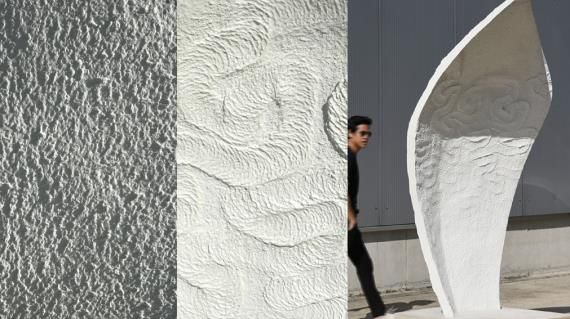
Robotic Fiber Winding

                Design-Inspiration

          A                                                                         B

          C                                                                        D

          E                                                                         F

          G                                                                         H

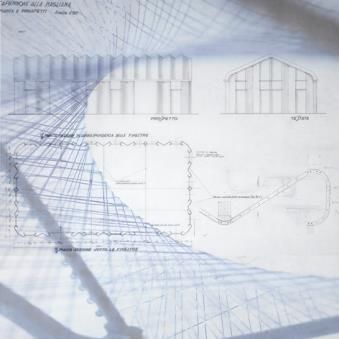
      •       A and B:Magliana Pavilion by Pier Luigi Nervi, built in 1945-46, www.espazium.ch/it/archi3-20_nervi

      •       C and D: Digital fabrication of ribbed concrete shells using automated robotic concrete spraying,
              www.sciencedirect.com/science/article/pii/S2214860422005486?via%3Dihub

      •       E: Becoming Structure, Implemented prototype at the campus of the University of Innsbruck by i.sd_structure and design.,
              www.link.springer.com/chapter/10.1007/978-3-030-29829-6_17

      •       F: Robotic AeroCrete, Robotic Concrete Spraying and Surface Articulation,
              www.papers.cumincad.org/data/works/att/ecaadesigradi2019_675.pdf

      •       G: ICD/ITKE Research Pavilion 2016-17, www.icd.uni-stuttgart.de/projects/icditke-research-pavilion-2016-17/

      •       H:Maison Fibre, 2021 ICD Research Buildings / Prototypes, 17th International Architecture Exhibition – La Biennale di Venezia 2021, Italy,
              www.icd.uni-stuttgart.de/projects/maison-fibre/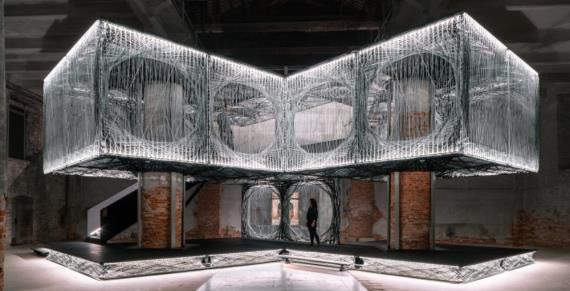
Robotic Fiber Winding

                Timeline

                        April                                            May                                          June                                         July
        Q1         Q2           Q3        Q4            Q1           Q2          Q3           Q4        Q1          Q2         Q3        Q4          Q1       Q2          Q3        Q4

        Break                                           KE                                                                                Seminar
                                               Design

                                                     Serie of Small Prototypes

                                                                                    Presentation

                                                                                                        Break        Introductions

                                                                                                                                     Preparation

                                                                                                                                                               Final Prototype    Presentation

                        April                                         May                                           June                                       July
       13    Thursday       Week 1 - KE          4       Thursday                Week 4            8     Thursday     Week 1 - Seminar     6       Thursday              Week 5

       20    Thursday           Week 2          11       Thursday                Week 5            15    Thursday           Week 2         13      Thursday              Week 6

       27    Thursday           Week 3          25       Thursday                Week 6            22    Thursday           Week 3         20      Thursday              Week 7

                                                26         Friday        Final Presentation - KE   29    Thursday           Week 4         21       Friday    Final Presentation _ Seminar
Robotic Fiber Winding

          Location

   KE

   Seminarraum 110 [4204.01.110],
   Altgebäude, Pockelsstraße 4

                                                        Seminarraum 110

   Seminar

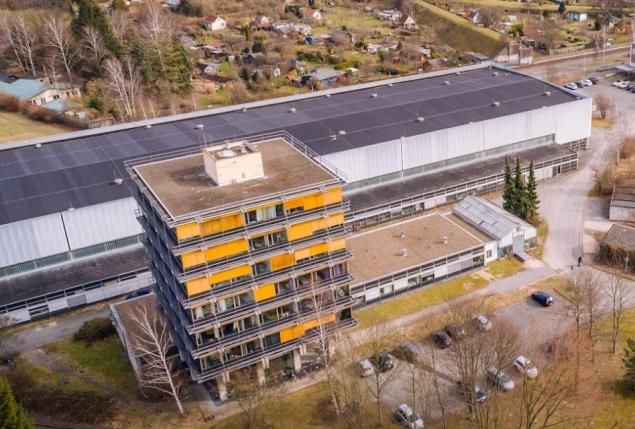
   Technische Universität Braunschweig DBFL Digital Building Fabrication Laboratory_Institut für
   Tragwerksentwurf, Beethovenstraße 51a, 38106 Braunschweig
   https://goo.gl/maps/V7wgWYbpaX5KR53S6

                                 DBFL Digital
                             Building Fabrication

                                                           DBFL Digital
                                                       Building Fabrication

                                                                       Entrance
Sie können auch lesen


