INSTALLATION & OPERATING MANUAL EINBAU- & BEDIENUNGSANLEITUNG - 2- AND 4-CHANNEL AMPLIFIERS
←
→
Transkription von Seiteninhalten
Wenn Ihr Browser die Seite nicht korrekt rendert, bitte, lesen Sie den Inhalt der Seite unten
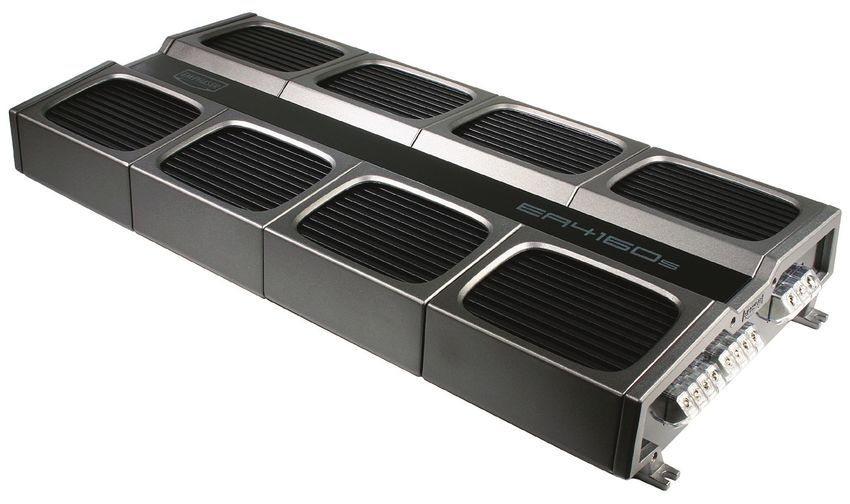
2- AND 4-CHANNEL AMPLIFIERS
          INSTALLATION & OPERATING MANUAL
          EINbAU- & bEDIENUNGSANLEITUNG

EA 2-4-5 CH Manual (EDF)_2008.indd 1                     25.02.2008 17:29:48 Uhr
CONTENTS

           1. DESIGN FEATURES                                                      5

           2. CONNECTIONS & CONTROLS                                           6-11

        2.1 FRONT & REAR PANEL CONNECTION & CONTROLS EA2160s/EA2260s            6-7

        2.2 FRONT & REAR PANEL CONNECTIONS & CONTROLS EA4160s                   8-9

        2.3 SPEAKER IMPEDANCE & POWER WIRE INFO                                  10

           3. AMPLIFIER MOUNTING                                                 10

           4. WIRE ROUTING                                                       11

        4.1 MAIN POWER WIRES                                                     11

        4.1 RCA & REMOTE WIRES                                                   11

        4.3 LOUDSPEAKER WIRES                                                    11

           5. CROSSOVER ADJUSTMENTS                                          12-13

        5.1 SELECTING THE OPERATION MODE                                         12

        5.2 HIGH PASS CROSSOVER FREQUENCY ADJUSTMENT                             12

        5.3 LOW PASS CROSSOVER FREQUENCY ADJUSTMENT                              12

        5.4 SUBSONIC/HIGH PASS CROSSOVER ADJUSTMENT                              13

        5.5 INPUT LEVEL ADJUSTMENT                                               13

           6. TECHNICAL SPECIFICATIONS                                           25

           7. LIMITED WARRANTY                                                   26

        7.1 WARRANTY LIMITATIONS                                                 26

           8. WARRANTY CARD                                                      27

       2

EA 2-4-5 CH Manual (EDF)_2008.indd 2                                   25.02.2008 17:29:48 Uhr
INHALT

          1. TECHNISCHER AUFBAU/MERKMALE                          15

          2. EINGÄNGE & FUNKTIONEN                            16-20

         2.1 EINGÄNGE & FUNKTIONEN EA2160s/EA2260s            16-17

         2.2 EINGÄNGE & FUNKTIONEN EA4160s                    18-19

         2.3 LAUTSPRECHER-IMPEDANZ & POWERKABEL INFO              20

          3. MONTAGE DES VERSTÄRKERS                              21

          4. VERKABELUNG / ELEKTRISCHER ANSCHLUSS                 21

         4.1 HAUPT-STROMKABEL                                     21

         4.2 CINCH- & REMOTE KABEL                                22

         4.3 LAUTSPRECHERKABEL                                    22

          5. EINSTELLUNG DER FREQUENZWEICHE                       22

         5.1 WAHL DES BETRIEBSMODUS                               22

         5.2 HOCHPASS TRENNFREQUENZ                               23

         5.3 TIEFPASS TRENNFREQUENZ                               23

         5.4 SUBSONIC/HOCHPASS TRENNFREQUENZ                      23

         5.5 ANPASSUNG DER EINGANGSEMPFINDLICHKEIT                24

          6. TECHNISCHE SPEZIFIKATIONEN                           25

          7. GARANTIE-BESTIMMUNGEN                                26

         7.1 GARANTIE-EINSCHRÄNKUNGEN                             26

          8. GARANTIEKARTE                                        27

                                                                  3

EA 2-4-5 CH Manual (EDF)_2008.indd 3                   25.02.2008 17:29:48 Uhr
Congratulations!
And thank you for choosing this EMPHASER car audio amplifier!
To maximize the performance of this amplifier and your car audio system install, we recommend that
you acquaint yourself thoroughly with all capabilities and features of the EMPHASER amplifier model
you have chosen. Please read this manual carefully, before attempting the installation of this amplifier.
Please retain this manual and your purchasing / installation receipts for future reference.
IMPORTANT NOTICE:
In case you are installing your EMPHASER amplifier by yourself, you should
have your installation checked and approved by an authorized professional
EMPHASER dealer/installer, in order to qualify for full warranty protection and
also, to reach maximum power-output and audio performance possible with
your individual car audio system.
4
EA 2-4-5 CH Manual (EDF)_2008.indd 4 25.02.2008 17:29:48 Uhr1. DESIGN FEATURES
■ CAR AUDIO Amplifier: This EMPHASER amplifier allows the crossover controlled amplification
of satellite speaker systems, kickwoofers and subwoofer systems
■ Integrated Electronic CROSSOVER: The internal crossover section features indepen-
dently selectable highpass or bandpass filtering, as well as fulllrange loop through. All x-overs feature
crossover slope rates of 12/24 dB/octave for high- and low-pass sections.
■ Uncompromising Design AND CONSTRUCTION: Only best electronic parts and
components have been used for the assembly of this amplifier line. Such as double-sided glass-fiber
epoxy circuit boards equipped with high current TR output devices.
■ Advanced Protection Circuitry: The protection circuitry safe-guards the amplifier
from short-circuits at the speaker outputs, DC offset voltage at the outputs and overheating of power
electronics
■ Status and Protection LED’s: A green and a red LED located at the side panel enable
you to monitor the operating status of your EMPHASER amp
■ Adjustable Input Sensitivity: Each RCA line-input pair accepts input voltages from
300mV to 7V, providing a good match to the line-output levels of almost any head-unit on the mar-
ket
5
EA 2-4-5 CH Manual (EDF)_2008.indd 5 25.02.2008 17:29:48 Uhr2. CONNECTIONS & CONTROLS
2.1 FRONT PANEL EA2160s/EA2260s
1 POWER LED
Green “operation” LED, signaling correct operation of the amplifier.
2 INPUT GAIN CONTROL
Input level gain control potentiometer – to match the output voltage of the headunit’s RCA
line-outs to the amplifier input section.
3 HIGH PASS CROSSOVER FREQUENCY CONTROL
Crossover control potentiometer for the frequency adjustment of the 12dB/oct. high-pass
filter.
4 RCA INPUTS 1/2-CH
Low-level stereo RCA signal input for connection with line-out of the head-unit.
5 Operation Mode Switch
Switch to select the operation mode of the crossover driving the amplifier.
6 LOW PASS CROSSOVER FREQUENCY CONTROL
Crossover control potentiometer for the frequency adjustment of the 24dB/oct. low-pass
filter.
7 REMOTE LOW PASS LEVEL PORT
Telephone jack input socket for connection with the dash-mounted low-pass level remote
unit.
8 PROTECTION LED
Red “protection” LED, signaling faulty speaker connections or general malfunction of the
amplifier.
EA2160s/EA2260s
1 2 3 4 54 6 7 8
6
EA 2-4-5 CH Manual (EDF)_2008.indd 6 25.02.2008 17:29:51 Uhr2. CONNECTIONS & CONTROLS
2.1 REAR PANEL EA2160s/EA2260s
9 “OUTPUT TERMINALS”
Loudspeaker output terminal to connect the loudspeakers.
10 “GND” POWER INPUT TERMINAL
Moulded direct power input terminals to connect the amplifier to the negative or ground
wire of the vehicle.
11 “REMOTE” INPUT TERMINAL
Terminal to connect the amplifier to the automatic (remote) turn-on / turn-off lead of the
head unit.
12 “+12V” POWER INPUT TERMINAL
Moulded direct power input terminals to connect the amplifier to the positive +12V power
wire connected to the car battery.
EA2160s
9 bn bm bl
EA2260s
bl bn bm 9
7
EA 2-4-5 CH Manual (EDF)_2008.indd 7 25.02.2008 17:29:51 Uhr2. CONNECTIONS & CONTROLS
2.2 FRONT PANEL EA4160s
1 POWER LED
Green „operation“ LED, signaling correct operation of the amplifier.
2 INPUT GAIN CONTROL 1/2-CH
Input level control for 1/2-CH amplifier section – to match the output voltage of the head-
unit‘s RCA line-outs to the amplifier input section.
3 HIGH PASS FREQUENCY CONTROL 1/2-CH
Control for the frequency adjustment of the 12dB/oct. high-pass filtering of the speakers
connected to 1/2-CH output terminals.
4 OPERATION MODE SWITCH 1/2-CH
Switch to select the operation mode of the crossover driving 1/2-CH section of the
amplifier.
5 LOW PASS FREQUENCY CONTROL 1/2-CH
Control for the frequency adjustment of the 24dB/oct. low-pass filtering of the speakers
connected to 1/2-CH output terminals.
6 INPUT GAIN CONTROL 3/4-CH
Input level control for 3/4-CH amplifier section – to match the output voltage of the head-
unit‘s RCA line-outs to the amplifier input section.
7 HIGH PASS FREQUENCY CONTROL 3/4-CH
Control for the frequency adjustment of the 12dB/oct. high-pass filtering of the speakers
connected to 3/4-CH output terminals.
8 OPERATION MODE SWITCH 3/4-CH
Switch to select the operation mode of the crossover driving 3/4-CH section of the
amplifier.
9 LOW PASS FREQUENCY CONTROL 3/4-CH
Control for the frequency adjustment of the 24dB/oct. low-pass filtering of the speakers
connected to 3/4-CH output terminals.
10 PROTECTION LED
Red „protection“ LED, signaling faulty speaker connections or general malfunction of the
amplifier.
11 RCA INPUTS 1/2-CH 3/4-CH
Low-level stereo RCA signal input for connection with head-unit.
8
EA 2-4-5 CH Manual (EDF)_2008.indd 8 25.02.2008 17:29:52 UhrEA4160s
12 3 4 5 6 7 8 9 bl
bm
2. CONNECTIONS & CONTROLS
2.2 REAR PANEL EA4160s
12 SPEAKER OUTPUT TERMINALS 1/2-CH and 3/4-CH
Output terminals to connect the speakers in stereo or bridged mode to the amplifier.
13 „GND“ POWER INPUT TERMINAL
Terminal to connect the amplifier to the negative or ground pole of the car battery.
14 „REM“ REMOTE INPUT TERMINAL
Terminal to connect the amplifier to the automatic (remote) turn-on / turn-off lead of the
head unit.
15 „+12 V“ POWER INPUT TERMINAL
Terminal to connect the amplifier to the positive +12V pole of the car battery.
EA4160s
bn bq bp bo
9
EA 2-4-5 CH Manual (EDF)_2008.indd 9 25.02.2008 17:29:52 Uhr2.3 Speaker Impedance & POWER WIRE INFO
The heat dissipation capacity of this amplifier line has been designed to cope with low impedance
loads. However, EMPHASER laboratories recommend to stay at or above the suggested impedance
ratings listed below:
EA2160s ➡ 4 ohms mono / 2 ohms stereo
EA2220s ➡ 2 ohms mono / 1 ohms stereo
EA4160s ➡ 4 ohms mono / 2 ohms stereo
Note: EMPHASER laboratories recommend a minimum main power cable cross-
section (5m total length) of 20 to 50 mm², for both the positive and the ground
wires.
These recommendations guarantee trouble-free operation of your amplifier, giving you full power
output.
3. Amplifier Mounting
Attention! For your own safety, disconnect the negative battery terminal (GND)
or remove the main fuse in the positive power cable near the car battery, before
you start any wiring work!
Before you proceed to install this EMPHASER amplifier, it is recommended to map out the complete
system and the respective wiring required. Consider all additional electrical requirements and accesso-
ries, such as power cables, interconnect cables etc., to complete the install. Please note that - because
of possible interference problems with the existing car electrics and electronics - especially the routing
of the signal cables and the chassis ground connection will have a profound impact on the trouble-free
(noise free!) operation of the amplifier.
The mounting location should be carefully selected and in the interest of passive driver and passenger
safety, the amplifier must be securely mounted. Make sure that there is no wiring harness, fuel tank
etc. behind or below the mounting surface, that may be damaged by the drilling of the holes for the
amplifier mounting screws. After installation, there should be a clearance of at least 5cm to all sides
including the top of the amplifier heatsink. Make sure the unit is not exposed to direct sunlight, humid-
ity, water, oil or spill of other fluids that may enter the amplifier.
Once the location where the amplifier will be mounted is defined, use the unit as a template for the
marking of the mounting holes with pencil or felt-tip marker. The mounting holes should be pilot-drilled,
using a 2,5mm or 3mm drill bit. Bolt the amp down.
Important! There must not be a direct contact of the amplifier heatsink, bottom
panel or any other metal part of the amplifier to the vehicle! Electrical ground-
loops can result in audible hum!
10
EA 2-4-5 CH Manual (EDF)_2008.indd 10 25.02.2008 17:29:52 Uhr4. WIRE Routing
4.1 Main Power WIRES
Run the positive main power cable („+12 V“) directly from the positive terminal of the car battery to
the amplifier. For protection of your car audio system against electrical fire hazards, resulting from a
short-circuit of the main power cable to chassis ground a main fuse holder must be inserted
within the first 30 cm of the positive main power cable. The applicable fuse value must
be matched to the limitations of your main power cable AND the current draw of the amplifier – there-
fore choose an appropriate fuse value.
Attach the ground cable to the amplifier. In most cases it will be best to keep the ground
cable („-12V“) as short as possible, i.e. to find a chassis contact very close to the amplifier. The ground
power wire must have the same cross-section as the positive power cable. The contact point where the
ground wire is attached to, must be solid and clean, i.e. free from rust or paint!
Tighten both power input terminals of the amplifier, and double check for perfect fit of both main
cable leads!
4.2 RCA & REMOTE WIRES
Carefully run the audio signal interconnects, the remote wire and – if applicable - the cable of the low
pass level remote control from the head-unit or dashboard to the amplifier. As mentioned before, the
audio signal cables should always be routed completely separate from the power cables. Connect the
remote (turn on/turn off) lead to the respective input terminal of the amplifier and to the remote output
of your head-unit. Now you can connect the RCA interconnects to the respective outputs of your head-
unit and to the inputs of the amplifier. Pay attention to connect the stereo interconnects correspondingly,
left is 1CH, right is always 2CH a.s.o.
If you want to drive a subwoofer system with your amplifier, you can install the remote low pass level
control in a convenient position under or besides the dashboard.
4.3 Loudspeaker WireS
Once the speaker cables have been routed, turn loose the screws of the speaker terminal binding
posts and – after inserting the stripped speaker cables – re-tighten the screws. When baring wires for
connection, remove approximately 6-8mm of the insulation and after axially twisting the wires, insert
the bare ends into the corresponding speaker terminal output on the amplifier. Maintain correct
polarity („A“ to „A“; „B„ to „B„).
Close the electrical circuit by attaching the ground wire to the battery. Now switch on your head unit.
The green OPERATING LED of the amplifier should light-up. If the red LED lights up red, your installa-
tion is wrong! Immediately turn off your head-unit and carefully re-check all installation steps!
11
EA 2-4-5 CH Manual (EDF)_2008.indd 11 25.02.2008 17:29:52 Uhr5. CROSSOVER ADJUSTMENTS
5.1 Selecting the Operation Mode
You must select and set the appropriate operation mode before you can attempt any of the crossover
frequency adjustments. This setting depends on the speaker system connected to the amplifier. Select
the appropriate operation mode as follows:
➡ Select HIGHPASS, if the speaker system is a component-, coaxial- or triaxial- type.
➡ Select BANDPASS in case of a kickbass system, or a subwoofer system.
Selecting the appropriate operating mode for each channel pair makes sure, that the speakers con-
nected to the amplifier outputs will only receive filtered signals, so the speakers will only have to oper-
ate in the frequency band they can reproduce best.
Note: If you own a head-unit, that features an integrated DSP controlled crossover, it is recommended
to use the DSP based crossovers of the headunit. In this case, you have to set the operation mode slide
switch(es) to FULL(range)!
5.2 HIGH PASS CROSSOVER FREQUENCY ADJUSTMENT
For satellite speakers, you always select the “HPF” mode, to cut off the bass content in the music signal.
Highpass filtering will take away unnecessary mechanical and electrical ‘strain’ from the connected
coaxial or component speaker systems, as they cannot reproduce strong and low bass signals any-
way. Depending on the actual cone surface, voice-coil diameter and the rated power handling of the
installed ‘satellite’ speakers, it is recommended to set the high-pass cross-over frequency point between
50 and 150Hz, using the „HPF“ potentiometer.
Front Door Satellite Speaker System („HPF” MODE) HP CrossOver Frequency
13 cm 2-way Component System 80 - 110Hz
16 cm 2- or 3-way Component System 50 - 80Hz
Rear Satellite Speaker System („HPF” MODE) HP CrossOver Frequency
13 cm 2-way Coaxial or Component System 100 - 120Hz*
16 cm 2-way Coaxial or Component System 100 - 120Hz*
6x9” or 7x10” Triaxial Speaker System 100 - 120Hz*
* When a subwoofer is part of the audio system install.
5.3 LOW PASS CROSSOVER FREQUENCY ADJUSTMENT
Select “BPF”, to activate the lowpass filter of the integrated electronic crossover.
Note: Before you attempt to adjust the lowpass crossover frequency, you must set the subsonic highpass
filter control (when “BPF” mode is selected) to its lowest position (10 Hz).
Note: For the 2- and 4-channel amplifier models, the bandpass (“BPF”) mode will engage the HPF
potentiometer as subsonic highpass.
The LOWPASS cut-off frequency setting depends on some variables and each vehicle is different! As
a rule of thumb, settings in a range between 60 to 90 Hz will render best sonic results. This setting is
mostly a matter of taste, and should therefore be ‘played by ear’.
Note: In general, setting the lowpass crossover frequency too low, will result in a weak and muddy
sounding bass, while setting this crossover frequency too high will result in a ‘booming’ bass sound
and reduced low end extension.
12
EA 2-4-5 CH Manual (EDF)_2008.indd 12 25.02.2008 17:29:52 Uhr5.4 SUBSONIC/HIGH PASS CROSSOVER FREQUENCY ADJUSTMENT
When driving a subwoofer in bandpass (“BPF”) operation mode, you should also adjust the subsonic
highpass frequency. This is done by adjusting the “HPF” potentiometer. This setting depends the size
and the power handling of the installed subwoofer system. The higher the subsonic crossover fre-
quency is set, the higher the mechanical power handling of the connected subwoofer system will be.
The trade-off is reduced low end extension! The subsonic highpass can not be bypassed, when the
operation mode is set to BPF mode, but you can set the HPF potentiometer at 10Hz, so the subsonic
highpass filtering remains inaudible.
5.5 INPUT LEVEL ADJUSTMENT
To reach a maximum in dynamic response from each individual head-unit/amplifier/speaker combi-
nation, it is important to set the respective input level controls („GAIN“) of all channel pairs correctly.
Before you start, you MUST set all tone controls (Bass, Mid, Treble, Loudness etc.) and the fader
on the head unit to their neutral or center positions.
Now turn all input gain controls of the installed amplifiers anti-clockwise to their minimum positions
and start with the channel pair, that drives the subwoofer system. The lowpass level remote control - if
installed in your system configuration - should be set at a low position, so there is enough headroom
to turn up the bass volume later on.
➡ SUBWOOFER CHANNEL
Set the volume control of your head-unit to approximately 3/4 of full volume, while playing a dynamic
piece of music. Slowly increase the input gain control of the channel pair, that drives the subwoofer(s),
by turning the GAIN control clockwise until you can just about hear distorted sounds coming out of
your subwoofer system. Reduce the main volume level on your head-unit to a medium listening level.
➡ SATELLITE CHANNELS
Slowly increase the input gain control of the channel pair, that drives the satellite system, by turning
the GAIN potentiometer clockwise, until you reach a good tonal balance with a slight emphasis in the
bass region. Aim at a full bodied bass response.
Now slowly turn up the input GAIN control of the remaining channel pair(s) - if any - until you reach
a good tonal balance between front and rear satellites.
➡ FINE TUNING OF ALL CROSSOVER FREQUENCY POINT SETTINGS
Finally you can attempt to fine-tune the HP and BP crossover frequencies on your amplifier, to obtain
the best sound quality of all loudspeakers connected to your car audio system.
13
EA 2-4-5 CH Manual (EDF)_2008.indd 13 25.02.2008 17:29:52 UhrHerzlichen Glückwunsch!
Wir danken Ihnen, dass Sie sich zum Kauf dieses EMPHASER Verstärkers entschieden haben.
Damit Sie die Wiedergabequalität und die Leistungsfähigkeit Ihres Verstärkers voll ausschöpfen kön-
nen, möchten wir Sie bitten, sich eingehend mit den Möglichkeiten und technischen Features dieses
Verstärkers vertraut zu machen. Lesen Sie deshalb die nachfolgenden Abschnitte sorgfältig durch und
bewahren Sie diese Bedienungsanleitung für allfällige, vielleicht später auftauchende Fragen auf.
WICHTIGE INFO:
Wenn Sie den Einbau dieses Car-Audio Verstärkers selbst vornehmen, las-
sen Sie Ihren Einbau abschliessend von Ihrem Händler auf fachgerechte
Installation überprüfen. Damit sichern Sie sich die volle Garantieleistung und
stellen weiterhin sicher, dass Ihre Car-HiFi Anlage ihre volle Klangqualität und
Leistungsfähigkeit erreicht.
14
EA 2-4-5 CH Manual (EDF)_2008.indd 14 25.02.2008 17:29:52 Uhr1. TECHNISCHER AUFBAU/MERKMALE
■ CAR AUDIO Verstärker: Dieser Verstärker dient zur Realisierung eines einbaufreundlichen
klangstarken und sehr leistungsfähigen Car Audio Systems
■ Subwooferpegelregelung über externe Kabelfernbedienung: Die im Fond
des Fahrzeuges montierbare kleine Fernbedienung ermöglicht die bequeme Anpassung der Lautstärke
des Subwoofers vom Fahrersitz (ausgenommen EA4160s)
■ Integrierte elektronische Frequenzweiche: In diesem Verstärker sind, vollkommen
unabhängige elektronische Frequenzweichen mit einer Flankensteilheit von 12/24 dB/Okt. integriert.
Es lassen sich Hochpassfilter und Bandpassfilter wählen, oder der jeweilige Frequenzweichenzweig
kann im Fullrange Betrieb vollständig umgangen werden
■ Kompromissloser AuFbau und Konstruktion: Durch die ausschliessliche
Verwendung von hochwertigsten Materialien in der Fertigung, ist die Betriebssicherheit besonders
hoch. Zum Einsatz kommen z.B. doppelseitig kaschierte Epoxy Glasfaser-Epoxydharzplatinen,
hochstromfähige Transistoren etc. Weiterhin verfügt diese Verstärkerlinie über „Direct Power-Input
Terminals“, die für vollen unlimitierten Stromfluss sorgen
■ Intelligente Schutzschaltung: Die integrierte Schutzschaltung erkennt Kurzschlüsse an
den Lautsprecherausgängen, Gleichspannung im Ausgangssignal und überhöhte Betriebstemperatur.
Fehlerhafte Betriebszustände führen zum sofortigen Abschalten des Gerätes
■ POWER / Protect LED’s: Am Side Panel auf der Cinch-Eingangsseite befinden sich zwei
LED’s, welche den Betriebs-Status des Verstärkers anzeigen
■ Grosser Regelbereich der Eingangsempfindlichkeit: Die Line Level Ein-
gangspaare akzeptieren Vorverstärker-Signale von 300mV bis 7V. Dies garantiert, dass diese
Endstufe mit allen am Markt erhältlichen Steuergeräten kombiniert werden kann
15
EA 2-4-5 CH Manual (EDF)_2008.indd 15 25.02.2008 17:29:52 Uhr2. EINGÄNGE & FUNKTIONEN
2.1 FRONT PANEL EA2160s/EA2260s
1 POWER LED
Grüne “Power” LED; signalisiert den normalen Betriebszustand der Endstufe im
eingeschalteten Zustand.
2 REGLER EINGANGSEMPFINDLICHKEIT
Eingangsempfindlichkeits-Poti für die Anpassung an die Ausgangsspannung des
Steuergerätes.
3 REGLER SUBSONIC TRENNFREQUENZ
Regler zum Einstellen der Hochpass-Trennfrequenz an der integrierten elektronischen
Frequenzweiche.
4 CINCH EINGÄNGE 1/2-CH
Cinch Eingangsbuchsen 1/2-CH für den Anschluss an die Cinch Ausgänge des
Steuergerätes.
5 Betriebsmodus SCHALTER
Schiebeschalter für die Festelegung der Arbeitsweise der integrierten elektronischen
Frequenzweiche.
6 REGLER TIEFPASS TRENNFREQUENZ
Regler zum Einstellen der Tiefpass-Trennfrequenz an der integrierten elektronischen
Frequenzweiche.
7 EINGANGSBUCHSE FÜR DIE FERNBEDIENUNGSEINHEIT
Telefonbuchsen Eingang zum Anschluss des Verbindungskabels der Fernbedienungseinheit.
8 PROTECTION LED
Rote „Protection” LED; signalisiert eine generelle Fehlfunktion der Endstufe, wie z.B.
Kurzschluss an den Lautsprecherausgängen, Überhitzung sowie Gleichspannung an den
Lautsprecher-Ausgängen.
EA2160s/EA2260s
1 2 3 4 54 6 7 8
16
EA 2-4-5 CH Manual (EDF)_2008.indd 16 25.02.2008 17:29:53 Uhr2. EINGÄNGE & FUNKTIONEN
2.1 REAR PANEL EA2160s/EA2260s
9 LAUTSPRECHER AUSGANGS-TERMINAL
Lautsprecheranschlussterminal für den Anschluss von Lautsprechern.
10 „GND“ POWER INPUT TERMINAL
Direkt-Eingansterminal für den Anschluss an die Chassis-Masse des Kfz’s, oder den Minuspol
der Fahrzeugbatterie.
11 „REM“ INPUT TERMINAL
Eingangsterminal für den Anschluss des Remote-Kabels des Amp- oder Antenna-Remote
Ausgangs des Steuergerätes.
12 „+12V“ POWER INPUT TERMINAL
Direkt-Eingangsterminal für den Anschluss an den 12V Pluspol der Fahrzeugbatterie.
EA2160s
9 bn bm bl
EA2260s
bl bn bm 9
17
EA 2-4-5 CH Manual (EDF)_2008.indd 17 25.02.2008 17:29:53 Uhr2. EINGÄNGE & FUNKTIONEN
2.2 FRONT PANEL EA4160s
1 POWER LED
Grüne “Power” LED; signalisiert den normalen Betriebszustand der Endstufe im
eingeschalteten Zustand.
2 REGLER EINGANGSEMPFINDLICHKEIT 1/2-CH
Eingangsempfindlichkeitsregler der Kanäle 1/2-CH, zur Anpassung an die
Ausgangsspannung des Steuergerätes.
3 REGLER HOCHPASS TRENNFREQUENZ 1/2-CH
Regler zum Einstellen der Hochpass-Trennfrequenz an der integrierten elektronischen
Frequenzweiche der Kanäle 1/2-CH.
4 Betriebsmodus SCHALTER 1/2-CH
Schiebeschalter für die Festelegung der Arbeitsweise der integrierten elektronischen
Frequenzweiche der Kanäle 1/2-CH.
5 REGLER TIEFPASS TRENNFREQUENZ 1/2-CH
Regler zum Einstellen der Tiefpass-Trennfrequenz an der integrierten elektronischen
Frequenzweiche der Kanäle 1/2-CH.
6 REGLER EINGANGSEMPFINDLICHKEIT 3/4-CH
Eingangsempfindlichkeitsregler der Kanäle 3/4-CH, zur Anpassung an die
Ausgangsspannung des Steuergerätes.
7 REGLER HOCHPASS TRENNFREQUENZ 3/4-CH
Regler zum Einstellen der Hochpass-Trennfrequenz an der integrierten elektronischen
Frequenzweiche der Kanäle 3/4-CH.
8 Betriebsmodus SCHALTER 3/4-CH
Schiebeschalter für die Festelegung der Arbeitsweise der integrierten elektronischen
Frequenzweiche der Kanäle 3/4-CH.
9 REGLER TIEFPASS TRENNFREQUENZ 3/4-CH
Regler zum Einstellen der Tiefpass-Trennfrequenz an der integrierten elektronischen
Frequenzweiche der Kanäle 3/4-CH.
10 PROTECTION LED
Rote “Protection” LED; signalisiert eine generelle Fehlfunktion der Endstufe, wie z.B.
Kurzschluss an den Lautsprecherausgängen, Überhitzung sowie Gleichspannung an den
Lautsprecher-Ausgängen.
11 CINCH EINGÄNGE 1/2-CH, 3/4-CH
Cinch Eingangsbuchsen 1/2-CH, 3/4-CH für den Anschluss der Cinch Ausgänge des
Steuergerätes.
18
EA 2-4-5 CH Manual (EDF)_2008.indd 18 25.02.2008 17:29:53 UhrEA4160s
12 3 4 5 6 7 8 9 bl
bm
2. EINGÄNGE & FUNKTIONEN
2.2 REAR PANEL EA4160s
12 LAUTSPRECHER AUSGANGS-TERMINAL
Lautsprecheranschlussterminal für den Anschluss von Lautsprechern.
13 „GND“ POWER INPUT TERMINAL
Direkt-Eingansterminal für den Anschluss an die Chassis-Masse des Kfz’s, oder den
Minuspol der Fahrzeugbatterie.
14 „REM“ INPUT TERMINAL
Eingangsterminal für den Anschluss des Remote-Kabels des Amp- oder Antenna-Remote
Ausgangs des Steuergerätes.
15 „+12V“ POWER INPUT TERMINAL
Direkt-Eingangsterminal für den Anschluss an den 12V Pluspol der Fahrzeugbatterie.
EA4160s
bn bq bp bo
19
EA 2-4-5 CH Manual (EDF)_2008.indd 19 25.02.2008 17:29:54 Uhr2.3 LAUTSPRECHER IMPEDANZ & KABELINFO
Die Wärmekapazität der Kühlrippen dieser Endstufenlinie wurde für niederohmige Lasten ausgelegt.
Die minimale Abschlussimpedanz des jeweiligen Verstärker Modells entnehmen Sie bitte den techni-
schen Daten. Die angegebenen Impedanzen für stereo und gebrückten Betrieb sollten nicht unter-
schritten werden! Beachten Sie nachfolgende Empfehlungen:
EA2160s ➡ 4 Ohm mono / 2 Ohm stereo
EA2220s ➡ 2 Ohm mono / 1 Ohm stereo
EA4160s ➡ 4 Ohm mono / 2 Ohm stereo
➡ HAUPTSTROMKABEL
EMPHASER empfiehlt einen minimalen Kabelquerschnitt (bei einer Länge von 5m) von 20–50mm²
für das +12V und das Massekabel. Falls die Endstufe an sehr niederohmigen Lasten oder im
Brückenbetrieb arbeiten muss – oder eine weitere Endstufe im Anlagenkonzept integriert ist – empfiehlt
sich der Einsatz von 50 mm² Haupt- und Masse Stromkabeln.
Diese Empfehlungen garantieren eine problemlose Funktion dieses Verstärkers, sowie die volle
Leistungsabgabe ohne übermässige Erwärmung.
➡ CINCHKABEL
Für besten Klang und hohe Einstörfestigkeit sollten nur beste Cinchkabel verwendet werden.
Verwenden Sie dreifach abgeschirmte Kabel, oder aber sogenannte „Twisted Pair“ Typen. Beachten
Sie, dass speziell die Musiksignalführenden (Cinch-) Kabel soweit als möglich von allen potentiellen
„elektrischen Störsendern“ wie Bordcomputer, Benzinpumpe, Black Boxes, etc. verlegt werden.
➡ LAUTSPERCHER KABEL
Verwenden Sie qualitativ gutes Lautsprecherkabel mit einem minimalen Querschnitt von 2.5mm². Bei
grösseren Längen um 5m können Kabelquerschnitte bis 4.0mm² durchaus Sinn machen.
20
EA 2-4-5 CH Manual (EDF)_2008.indd 20 25.02.2008 17:29:54 Uhr3. Montage des Verstärkers
ACHTUNG! Entfernen Sie zu Ihrer eigenen Sicherheit erst das Massekabel von der
Batterie!
Bei allen nachfolgend beschriebenen Installationsschritten muss der Stromkreis des Kraftfahrzeugs
unterbrochen sein! Erst nach Abschluss aller Installationsarbeiten wird über das Massekabel der
Stromkreis wieder geschlossen.
Bevor Sie mit der Montage dieses Verstärkers beginnen: Berücksichtigen Sie vorab die Kabelverläufe
und den Installationsort des Car-Amps.
Der Verstärker sollte im Interesse der Sicherheit bei einem Unfall möglichst gut und solide montiert
werden. Die Endstufe sollte auf keinen Fall „unzugänglich verbaut“ werden, wegen der schlechten
Kühlung und auch den abschliessend erfolgenden Einstellarbeiten an den Side-Panels.
Als Montageort eignet sich z.B. ein Platz im Kofferraum oder an einem Seitenteil, bzw jeder andere
Ort, der eine saubere Installation ermöglicht.
Vermeiden Sie Montageorte mit „unbekanntem Hintergrund“. Es könnten sich ein Benzintank, hydrau-
lische Bremsleitungen, Kabelbäume etc. dahinter verbergen! Achten Sie auch auf einen trocken, gegen
mechanische Einwirkungen geschützten Installationsort.
Halten Sie den Verstärker an den gewünschten Ort und markieren Sie mit einem geeigneten Filzstift
die Bohrposition der Befestigungslöcher.
Mit der gebotenen Vorsicht bohren Sie nun die angezeichneten Löcher mit einem 2,5 oder 3 mm
Bohrer.
ACHTUNG: Die Endstufe darf niemals direkt auf die Fahrzeugmasse des Kfz’s geschraubt werden!
Legen Sie nun den Verstärker auf die vorgebohrten Löcher und schrauben Sie ihn gut fest.
4. Verkabelung/Elektrischer Anschluss
4.1 HAUPT-STROMKABEL
Verlegen Sie nun das Pluskabel direkt von der Batterie zum Verstärker.
Innerhalb der ersten 30cm nach dem Pluspolklemmenabgriff muss eine Hauptsicherung angebracht
werden (Absicherung des Pluskabels gegen Kurzschluss auf Fahrzeug-Masse und dadurch resultier-
endem Kabelbrand!)
Verwenden Sie eine dem Stromkabelquerschnitt entsprechende Haupt-Sicherung.
Schliessen Sie nun das Minuskabel am Verstärker an und an eine Massepunkt im Fahrzeug an.
Versuchen Sie dieses Kabel so kurz wie möglich zu halten. Es sollte ausserdem den selben Querschnitt
wie das Pluskabel besitzen. Achten Sie beim Massepunkt auf eine perfekt gesäuberte blanke
Metalloberfläche im Fahrzeug (schlechte Massepunkte sind für über 90 % aller Fälle der auftretenden
Störungen verantwortlich).
21
EA 2-4-5 CH Manual (EDF)_2008.indd 21 25.02.2008 17:29:54 Uhr4.2 CINCH- & REMOTE KABEL
Verlegen Sie das oder die Cinchkabel, das Fernbedienungskabel für die Pegel-Regelung von den
Kanälen die den Subwoofer treiben und das Remote-Kabel vom Steuergerät zur Endstufe.
Diese Kabel sollten unbedingt räumlich getrennt von der Stromzuführung des Verstärkers eingezogen
werden. Schliessen Sie das Remote-Kabel an das mit „REM“ bezeichnete Terminal an der Endstufe und
an das mit Antenna-Rem. oder Amplifier-Rem. bezeichnete Kabel Ihres Steuergerätes an.
Anschliessend stecken Sie die Cinchkabel in die Cincheingangsbuchsen des Verstärker ein. Beachten
Sie hierbei die Seitenkennung, d.h. 1-CH ist links, 2-CH ist rechts, etc!
Nun wird – falls erwünscht – noch die Fernbedienung in Griffnähe angebracht und die Stecker des
Kabels in die Buchsen am Verstärker und an der Fernbedienung eingesteckt. Die Pegelregelung des
Kanal-Paares im Lowpass Betrieb – mittels kabelgebundener Fernbedienungseinheit – ist optional.
Sollten Sie eine Regelung der Subwoofer-Kanäle über die regelbaren SUB-Level Line-Ausgänge am
Steuergerät bevorzugen, können Sie das Kabel und die Fernbedienungseinheit auch weglassen.
4.3 LAUTSPRECHERKABEL
Schliessen Sie nun die Lautsprecher Kabel an. Entfernen Sie ca. 6-8 mm der Isolierung des LS-Kabels
und beachten Sie die richtige Polung der Lautsprecherkabel am Terminal (Plus auf
Plus, Minus auf Minus). Ziehen Sie die LS-Schraublemmen satt an.
Schliessen Sie nun den Stromkreis zum Verstärker durch Remontage vom Massekabel an der Batterie.
Ihr Verstärker sollte nun beim Einschalten des Steuergerätes durch das Aufleuchten der grünen Power-
LED die Betriebsbereitschaft anzeigen. Leuchtet die Protection-LED rot auf, ist Ihre Installation fehler-
haft. Gehen Sie die gesamten Installationsanweisungen nochmals genau durch.
5. EINSTELLUNG DER FREQUENZWEICHE
5.1 WAHL DES BETRIEBSMODUS
In Abhängigkeit der angeschlossenen Lautsprechersysteme müssen Sie nun für die jeweiligen
Kanalpaare die Arbeitsweise der integrierten elektronischen Frequenzweiche definieren, bzw.
den X-OVER Schiebeschalter für das oder die Kanalpaare in die gewünschte Stellung bringen.
Jedes Kanalpaar ermöglicht die Wahl von Hochpass, bzw. Bandpass Betrieb der nachfolgenden
Verstärkerkanäle.
Die Hochpass/Bandpass Funktion der integrierten Frequenzweiche teilt den eingesetzten
Lautsprechersystemen wie z.B. Subwoofer, Koax- oder Komponentensystemen nur den Frequenzbereich
zu, für welchen die Lautsprecher geeignet sind. Beachten Sie folgende Einstellungen:
➡ Wählen Sie HIGHPASS (“HPF”), wenn der angeschlossene Lautsprecher ein Koax-, Triax- oder
Komponenenten Lautsprecher ist.
➡ Wählen Sie BANDPASS (“BPF”), wenn der angeschlossene Lautsprecher ein Kickbass- oder
Subwoofer System ist.
Falls Ihr Steuergerät über eine DSP basierte Frequenzweiche verfügt, ist es klanglich von Vorteil sämtli-
che Aktivweichen in der Endstufe umgehen und die Filterung bereits im Headunit vorzunehmen. In so
einem Fall müssen alle Operations-Modus Schalter auf „FULL“ gestellt werden. Die Konfiguration der
Frequenzweichen auf DSP Basis erfolgt dann direkt am Steuergerät.
22
EA 2-4-5 CH Manual (EDF)_2008.indd 22 25.02.2008 17:29:54 Uhr5.2 HOCHPASS TRENNFREQUENZ
Mit der Einstellung der Trennfrequenz des Hochpasses („HPF“) soll eine elektrische und mechanische
Entlastung der verwendeten Koax oder Komponentensysteme erfolgen. Je nach der vorhandenen
Membranfläche und Nennbelastbarkeit der verwendeten (Satelliten)-Systeme empfiehlt sich eine
Trennfrequenz im Bereich zwischen 50 bis 150Hz. Diese Einstellung kann über das „HPF“ Poti
vorgenommen werden.
Die Einstellung der Hochpass Trennfrequenz – sie stellt immer einen Kompromiss dar – sollte gehör-
mässig erfolgen und orientiert sich an der Midbasswiedergabe und der gewünschten Pegelfestigkeit
der „Satelliten“.
Dabei führt eine zu tief gewählte Trennfrequenz zu einer guten Midbasswiedergabe, schränkt aber die
Pegelfestigkeit stark ein. Eine zu hohe Trennfrequenzeinstellung hat einen „dünnen“ Klang mit guter
Pegelfestigkeit zur Folge. Als gute Annäherungen an die übliche Praxis können folgende Einstellungen
gelten:
Kompo oder Koaxsystem Front („HPF“ aktiviert) HP Trennfrequenz
13 cm 2-Weg Koax- oder Komponentensystem 80 – 110Hz
16 cm 2-Weg Koax- oder Komponentensystem 50 − 80Hz
Kompo oder Koaxsystem im Heckbereich („HPF“ aktiviert) HP Trennfrequenz
13 cm 2-Weg Koax- oder Komponentensysteme 100 − 120Hz*
16 cm 2-Weg Koax- oder Komponentensysteme 110 − 130Hz*
6x9“ oder 7x10“ Triaxialsystem 120 − 140Hz*
*Wenn ein Subwoofer Teil des Anlagenkonzeptes ist.
5.3 TIEFPASS (BANDPASS) TRENNFREQUENZ
Stellen Sie den OPERATION MODE Schiebeschalter auf „BPF“. Drehen Sie das „HPF“ Poti auf 10
Hz – die Subsonic Einstellung wird im nächsten Kapitel erläutert. Die zu wählende Trennfrequenz
des Tiefpasses (LPF) bei Betrieb eines Subwoofers sollte ungefähr im Bereich zwischen 50 bis 90 Hz
liegen. Justieren Sie den „LPF“ Regler so, dass der Bass satt und trocken mit genügend Tiefbassanteil
wiedergegeben wird. Diese Einstellung erfolgt rein gehörmässig. Eine zu tiefe Trennfrequenz lässt den
Bassbereich kraftlos und unkonturiert wirken. Eine zu hohe Trennfrequenz bewirkt ein Dröhnen des
Bassbereichs.
5.4 SUBSONIC/HOCHPASS TRENNFREQUENZ
Um den angeschlossenen Subwoofer von unnötiger Hubarbeit im subsonischen Bereich zu schützen,
sind im „BPF“ Betriebsmodus zwei Filter aktiv, das Tiefpassfilter UND der Subsonic-Hochpass. Das
integrierte Hochpassfilter lässt sich auf 10Hz herunterregeln und wirkt daher im Bandpassbetrieb als
Subsonicfilter. Das „Subsonicfilter“ schneidet alle Frequenzen unter dem eingestellten Wert mit 12dB/
Okt. ab und filtert die sehr tiefen (unhörbaren) Frequenzanteile im Programmaterial heraus, die der
angeschlossene Subwoofer entweder nicht wiedergeben kann, oder die ihn bei hohen Ausgangspegeln
zu extremen Auslenkungen treiben würden. Sie können das HPF Poti auch auf 10 Hz stehen lassen,
diese sehr tiefe Frequenz hat keinen Einfluss mehr auf den hörbaren Bassbereich.
23
EA 2-4-5 CH Manual (EDF)_2008.indd 23 25.02.2008 17:29:54 Uhr5.5 Anpassung der Eingangsempfindlichkeit
Die korrekte Eingangsempfindlichkeitseinstellung ist wichtig für die Ausnutzung des optimalen
Dynamikspielraumes Ihrer Steuergerät/Verstärker/Lautsprecherkombination. Diese Empfindlichkeits-
einstellung beeinflusst das Grundrauschen ebenso wie die verzerrungsfrei erzielbare Maximal-
lautstärke.
ACHTUNG! Bevor Sie mit der Anpassung der Eingangsempfindlichkeiten anfangen müssen zu-
allererst alle Klangregler am Headunit, sowie auch der Fader/Balance in die Mittel (Neutral) Position
gebracht werden. Die Loudnessfunktion ist auch zu deaktivieren.
SUBWOOFER KANAL
Drehen Sie den oder die Input GAIN Regler an der (oder den Endstufen) im Gegenuhrzeigersinn
auf die Minimumposition. Zuerst wird immer der Pegelabgleich des Kanalpaares am Verstärker
vorgenommen, welches das Subwoofersystem antreibt!
Stellen Sie den Lautstärkeregler Ihres Steuergerätes auf ca. 3/4 der Maximallautstärke und benutzen
Sie für die nun kommende Einstellung ein gut aufgenommenes dynamikreiches Musikstück.
Drehen Sie nun den GAIN Regler vom Subwoofer Kanalpaar des betreffenden Verstärkers langsam im
Uhrzeigersinn auf, bis Sie gerade die Verzerrungsgrenze im Bassbereich erreichen. Dann drehen Sie
den GAIN Regler gerade soweit zurück, dass die Verzerrungen wieder verschwinden.
Falls die Basspegel-Fernbedienung zum Einsatz kommt, stellen sie den Regler etwa in die Mitte, damit
nachher genug Regelbereich vorhanden ist.
FRONT KANÄLE & REAR KANÄLE
Stellen Sie nun die Lautstärke an Ihrem Steuergerät auf einen etwas leiseren Wert, und drehen Sie
den GAIN Regler vom Kanalpaar der Frontsysteme (z.B. Satelliten in den Vordertüren) langsam
auf. „Dosieren“ Sie die Lautstärke des vorderen Lautsprechersystems so hinzu, dass sich ein ausge-
wogener aber immer noch basskräftiger Klang ergibt. Nun können Sie noch in einem letzten Step
– wenn vorhanden – den GAIN Regler von weiteren Kanälen entsprechend hinzudosieren, z.B. die
Lautsprechersysteme im Heck.
FINE-TUNING
Meist ist am Schluss nochmals ein Feinabgleich aller Eingangsempfindlichkeits- und Trennfrequenz
Regler fällig, um den bestmöglichen Klang zu erzielen.
24
EA 2-4-5 CH Manual (EDF)_2008.indd 24 25.02.2008 17:29:54 Uhr6. TECHNICAL SPECIFICATIONS/TECHNISCHE SPEZIFIKATIONEN
EA2160s
2-CHANNEL AMPLIFIER 2-KANAL VERSTÄRKER
160W x 2 @ 4 ohms (< 1.0% THD / 13.8V) 160W x 2 @ 4 Ohm (< 1.0% THD / 13.8V)
260W x 2 @ 2 ohms (< 1.0% THD / 13.8V) 260W x 2 @ 2 Ohm (< 1.0% THD / 13.8V)
510W x 1 @ 4 ohms (< 1.0% THD / 13.8V) 510W x 1 @ 4 Ohm (< 1.0% THD / 13.8V)
2 ohms stable / 4 ohms stable in bridged mode 2 Ohm stabil / 4 Ohm stabil gebrückt
Integrated variable highpass filter: 10 - 300Hz with 12dB/oct. Integriertes variables Hochpassfilter: 10 - 300Hz mit 12dB/
Integrated variable lowpass filter: 30 - 300Hz with 24dB/oct. Integriertes variables Tiefpassfilter: 30 - 300Hz mit 24dB/Okt.
Variable input sensitivity: 0.3 - 7V Variable Eingangsempfindlichkeit: 0.3 - 7V
Damping factor @ 4 ohms: > 350 Dämpfungsfaktor an 4 Ohm: > 350
Signal to noise ratio: > 85dB Signal-Rauschabstand: > 85dB
Remote low pass level remote control Externe Basspegel-Fernbedienung
20mm² direct power input terminals 20mm² Strom-Anschluss Terminals
Dimensions WxHxD: 430 x 78 x 255mm Dimensionen BxHxT: 430 x 78 x 255mm
EA2260s
2-CHANNEL AMPLIFIER 2-KANAL VERSTÄRKER
280W x 2 @ 4 ohms (< 1.0% THD / 13.8V) 280W x 2 @ 4 Ohm (< 1.0% THD / 13.8V)
460W x 2 @ 2 ohms (< 1.0% THD / 13.8V) 460W x 2 @ 2 Ohm (< 1.0% THD / 13.8V)
620W x 2 @ 1 ohms (< 1.0% THD / 13.8V) 620W x 2 @ 1 Ohm (< 1.0% THD / 13.8V)
930W x 1 @ 4 ohms (< 1.0% THD / 13.8V) 930W x 1 @ 4 Ohm (< 1.0% THD / 13.8V)
1250W x 1 @ 2 ohms (< 1.0% THD / 13.8V) 1250W x 1 @ 2 Ohm (< 1.0% THD / 13.8V)
1 ohms stable / 2 ohms stable in bridged mode 1 Ohm stabil / 2 Ohm stabil gebrückt
Integrated variable highpass filter: 10 - 300Hz with 12dB/oct. Integriertes variables Hochpassfilter: 10 - 300Hz mit 12dB/Okt.
Integrated variable lowpass filter: 30 - 300Hz with 24dB/oct. Integriertes variables Tiefpassfilter: 30 - 300Hz mit 24dB/Okt.
Variable input sensitivity: 0.3 - 7V Variable Eingangsempfindlichkeit: 0.3 - 7V
Damping factor @ 4 ohms: > 250 Dämpfungsfaktor an 4 Ohm: > 250
Signal to noise ratio: > 85dB Signal-Rauschabstand: > 85dB
Remote low pass level remote control Externe Basspegel-Fernbedienung
50mm² direct power input terminals 50mm² Strom-Anschluss Terminals
Dimensions WxHxD: 590 x 78 x 255mm Dimensionen BxHxT: 590 x 78 x 255mm
EA4160s
4-CHANNEL AMPLIFIER 4-KANAL VERSTÄRKER
160W x 4 @ 4 ohms (< 1.0% THD / 13.8V) 160W x 4 @ 4 Ohm (< 1.0% THD / 13.8V)
220W x 4 @ 2 ohms (< 1.0% THD / 13.8V) 220W x 4 @ 2 Ohm (< 1.0% THD / 13.8V)
440W x 2 @ 4 ohms (< 1.0% THD / 13.8V) 440W x 2 @ 4 Ohm (< 1.0% THD / 13.8V)
2 ohms stable / 4 ohms stable in bridged mode 2 Ohm stabil / 4 Ohm stabil gebrückt
Integrated variable highpass filter: 10 - 300Hz with 12dB/oct. Integriertes variables Hochpassfilter: 10 - 300Hz mit 12dB/Okt.
Integrated variable lowpass filter: 30 - 300Hz with 24dB/oct. Integriertes variables Tiefpassfilter: 30 - 300Hz mit 24dB/Okt.
Variable input sensitivity: 0.3 - 7V Variable Eingangsempfindlichkeit: 0.3 - 7V
Damping factor @ 4 ohms: > 250 Dämpfungsfaktor an 4 Ohm: > 250
Signal to noise ratio: > 85dB Signal-Rauschabstand: > 85dB
20mm² direct power input terminals 20mm² Strom-Anschluss Terminals
Dimensions WxHxD: 555 x 78 x 255mm Dimensionen BxHxT: 555 x 78 x 255mm
25
EA 2-4-5 CH Manual (EDF)_2008.indd 25 25.02.2008 17:29:54 Uhr7. Limited Warranty
Dear customer
Please read the warranty specifications below carefully.
Should your EMPHASER product require warranty service, please return it to the retailer from whom
it was purchased or the distributor in your country. Please do not send any product to EMPHASER
Inc. U.S.A. Should you have difficulty in finding an authorized EMPHASER service center, details are
available from your local distributor.
This EMPHASER amplifier is fully warranted against defective materials or workmanship for a period
of two years from date of purchase at retail. Warranty work will not be carried out unless this
warranty certificate is presented fully completed with serial number, purchaser’s address, purchasing
date and dealer stamp together with the original sales slip and either an authorized dealer’s confir-
mation of installation or authorized dealer’s installation approval!
7.1 Warranty Limitations
This warranty does not cover any damage due to:
1. Unauthorized or unapproved installation, incorrect audio or mains connection(s).
2. Exposure to excessive humidity, fluids, sun rays or excessive dirt or dust.
3. Accidents or abuse, unauthorized repair attempts and
modifications not explicitly authorized by the manufacturer.
This warranty is limited to the repair or the replacement of the defective product at the manufactur-
er’s option and does not include any other form of damage, whether incidental, consequential or
otherwise. The warranty does not cover any transport costs or damages caused by transport or ship-
ment of the product.
7. Garantie-Bestimmungen
Sehr geehrter Kunde, sehr geehrte Kundin
Wir bitten Sie, die Originalverpackung für einen allfälligen Transport aufzuheben und die untenste-
henden Garantie-Bestimmungen genau durchzulesen.
Sollten Sie für Ihren Verstärker Garantie-Leistungen beanspruchen, wenden Sie sich bitte direkt an
den Händler, bei dem Sie das Gerät gekauft haben. Bitte senden Sie keine Geräte an EMPHASER
Inc. U.S.A. Bei Schwierigkeiten, ein geeignetes EMPHASER Service-Center zu finden, erhalten Sie
bei Ihrem jeweiligen Landes-Vertrieb weitere Informationen.
Der Hersteller gewährleistet auf diesen EMPHASER Verstärker für den Fall von Material- oder
Herstellungsfehlern zwei Jahre Garantie, ab Kaufdatum in Fachhandel. Garantie-Ansprüche kön-
nen nur mit einer korrekt und vollständig ausgefüllten Garantie-Karte zusammen mit dem Original-
Kaufbeleg geltend gemacht werden.
7.1 Garantie-Einschränkungen
Nicht unter Garantie fallen Schäden infolge von:
1. nicht-autorisierter bzw. nicht vom autorisierten Händler/Installateur geprüftem Selbst-Einbau
oder inkorrekten Audio- oder Stromanschlüssen.
2. schädlichen Einwirkungen von übermässiger Feuchtigkeit, Flüssigkeiten, Hitze,
Sonneneinstrahlung oder übermässiger Verschmutzung.
3. mechanischer Beschädigung durch Unfall, Fall oder Stoss; Schäden durch nicht autorisierte
Reparaturversuche oder nicht durch den Hersteller ausdrücklich autorisierte Modifikationen.
Die Garantie dieses Produkts bleibt in jedem Fall auf die Reparatur bzw. den Ersatz (Entscheidung
beim Hersteller) des jeweiligen EMPHASER Produkts beschränkt. Schäden durch unsachgemässe
Verpackung und daraus resultierende Transportschäden werden nicht durch diese Garantie gedeckt.
Jeder über diese Garantie-Erklärung hinausgehende Anspruch und jede Haftung für direkte oder
indirekte Folgeschäden werden ausdrücklich abgelehnt.
26
EA 2-4-5 CH Manual (EDF)_2008.indd 26 25.02.2008 17:29:54 Uhr8. WARRANTY CARD/GARANTIEKARTE
24 Months
Limited Warranty: ation Approval onl
y)
d Install
(Valid with authorize
EA2160s EA2260s EA4160s
Model name:
❏ EA2160s ❏ EA2260s ❏ EA4160s
Date of purchase:
Serial number:
Your name:
Your address:
City:
State: ZIP or Postal Code:
Country:
Your phone number:
Dealer’s address & stamp Installation Approval
❏ Installed by ❏ Self-installed
authorized dealer by customer
Installation date:
Inspected and
approved by:
EMPHASER Inc., Wyoming, Michigan, U.S.A.
Exclusive distributor for Europe & Asia
ACR, Brändli & Vögeli AG, Bohrturmweg 1, CH-5330 Bad Zurzach, Switzerland
Phone: (+41) (0)56 269 64 64, Fax: (+41) (0)56 269 64 65, mail@acr.eu, www.acr.eu
27
EA 2-4-5 CH Manual (EDF)_2008.indd 27 25.02.2008 17:29:55 UhrEmphaser Inc., Wyoming, Michigan, U.S.A. EA 2-4-5 CH Manual (EDF)_2008.indd 28 25.02.2008 17:29:55 Uhr
Sie können auch lesen


